DJ or chef? How Google remixes your ads for every AI Mode conversation
Google is serving up your existing search ads inside AI Mode, but never the same ad twice: it recombines your RSA assets into a unique headline for every conversation.

AI Mode
Ads are live in Google's AI Mode. They have been since the autumn in fact, but only in the US (but with India also named in the rollout). If you're running Google Ads campaigns in the UK, you're in the lovely position of being able to use AI Mode yourself every day with no ads. Sounds beautiful right? It won't last. Google has said more countries are coming, and if the AI Overviews rollout is anything to go by, "coming" tends to mean sooner than anyone has the mental capacity to deal with.
So before it lands here, it's worth getting clear on what AI Mode actually is, how an ad ends up inside it, and what you can (but currently mostly can't) see about it in the Google Ads interface. Then I'll get to what we're seeing in the US data at Adthena, and what’s going on with Google using your assets to progress their DJ or chef side hustle.
First, what AI Mode actually is
There's still a surprising amount of confusion here, so let's talk taxonomy for just a sec.
AI Mode is neither AI Overviews nor a LLM clone bolted onto google.com, though it borrows a bit from both. AI Overviews is the AI summary stitched to the top of the standard Google results page. You didn't ask for it, it just turns up, whether you wanted it or not, like a linkedin message pitching you “ai-powered, dolphin-friendly, ecosystem bandwidth leverage” immediately after accepting a connection request.
AI Mode is a separate, deliberately chosen tab within Google Search (next to "All" and "Images") that replaces the results page entirely with a conversational answer, built on Google's custom Gemini models. You ask, it answers in full, you follow up, and the whole thing behaves like an LLM chat experience with citations. It also has 1 billion monthly global users.
Under the bonnet (‘hood’ for you yanks) though, it uses what Google calls query fan-out: your single question gets split into multiple related searches issued simultaneously, then synthesised into one response (Keywords Everywhere's AI Mode tracker has a good running timeline on this). People use it differently too; Alphabet has said AI Mode queries run roughly three times longer than traditional searches. These are the long, messy, "I have a situation" questions nobody ever typed into old school Google.
AI Mode launched as a US Labs experiment in March 2025, reached the UK in July 2025, and is now in over 200 countries. The ads, though, are currently a US story (India was named alongside the US in Campaign's rollout coverage, though the data below is US only).
How an ad ends up in there
Here's the part that might surprise people: you can't target AI Mode, and you can't avoid it either. Well, kind of.
There's no AI Mode campaign type and no placement checkbox. Ads are pulled automatically from campaigns you're probably already running: Performance Max, Shopping, and Search campaigns using broad match, including AI Max for Search (Search Engine Land's coverage of the rollout has the detail). If you're running those, congratulations, you're likely already an AI Mode advertiser in the US. No special setup required, and per Google's help documentation on ads in AI experiences, no way to opt out.
Selection works differently from the classic auction too. Google evaluates whether your ad is relevant to the query and to the AI-generated response it would sit inside, and in a conversational session that includes the follow-ups, so context accumulates across the whole exchange. Win that relevance judgement plus the auction and your ad appears with a "Sponsored" label, typically woven below or within the response.
This is clearly just the opening format. At Google Marketing Live in May, Google announced AI Mode native formats now testing in the US: Conversational Discovery ads that generate creative in response to the specific query, and Highlighted Answers, where eligible ads appear inside AI-generated recommendation lists, all covered in Google's announcement.
What you can see in Google Ads (bring a torch)
Now the awkward bit. If you're expecting an "AI Mode" row in your segments menu, I think you'll be waiting a while.
There is currently no segmented reporting for AI Mode. Impressions, clicks and conversions from AI Mode placements flow into your existing campaign metrics, blended in with everything else. Google's help documentation groups AI placements under the "Top ads" location with no way to isolate them, describes the area as early stage, and offers no separate bidding for AI Mode inventory either.
In practice, US advertisers are reading CTR and CPC movement on AI-eligible campaigns, on-site engagement shifts after enabling AI Max. Directionally useful, forensically a bit hopeless. It's early Performance Max all over again in that sense, and Google has signalled granular reporting will come without committing to dates. Until it does, nobody outside Google can attribute a conversion to an AI Mode placement with confidence, which is partly why third-party observation of the surface has become the way to understand it.
What the US data actually shows
This is where I can add something beyond the documentation, because at Adthena we've been tracking ad serving across AI surfaces with our AI search ads monitoring dataset. Our Q2 tracking ran roughly 850,000 US queries across AI surfaces (findings from Adthena's AI Search Ads: The Advertiser Intelligence Report, worth a read in full), and I've pulled a fresh fortnight of US AI Mode data from 3rd to 16th August to see what the ads themselves actually look like.
First, the serving profile. In Q2, AI Mode carried ads on 5.8% of tracked US queries, so this is still a surface that holds fire most of the time. When it did serve, it could stack over 20 ad units into a single response once you count every placement, shopping tiles included; the August picture is more restrained on the text side however, with the typical ad-bearing response carrying one or two sponsored links. What's clearly growing is the breadth of who's in there. In that single fortnight (a sample of our data), we tracked 35,892 ad items from 6,120 distinct advertisers across more than 11,000 ad-triggering prompts, which is a lot of brands already live on a surface most UK marketers haven't seen an ad on yet.
The advertiser mix will feel familiar to anyone who watched ChatGPT ads launch in the UK, where comparison sites led the field. The most visible AI Mode advertisers in our August US data were NerdWallet, Carvana, Priceline, LendingTree, Compare.com and Insurify. Aggregators are once again first through the door, and it makes sense. Their entire model is answering "which one should I pick", which is exactly the kind of question people have with a conversational surface such as AI Mode.

So, is Google a DJ or a chef?
This is my favourite part of the dataset, and it starts by settling the "are these really just my existing ads?" question with receipts. 99.8% of the ad URLs we captured carry the standard Google Ads campaign tracking parameters you'd see on any ordinary search click. These are everyday campaign assets, served onto a new surface.
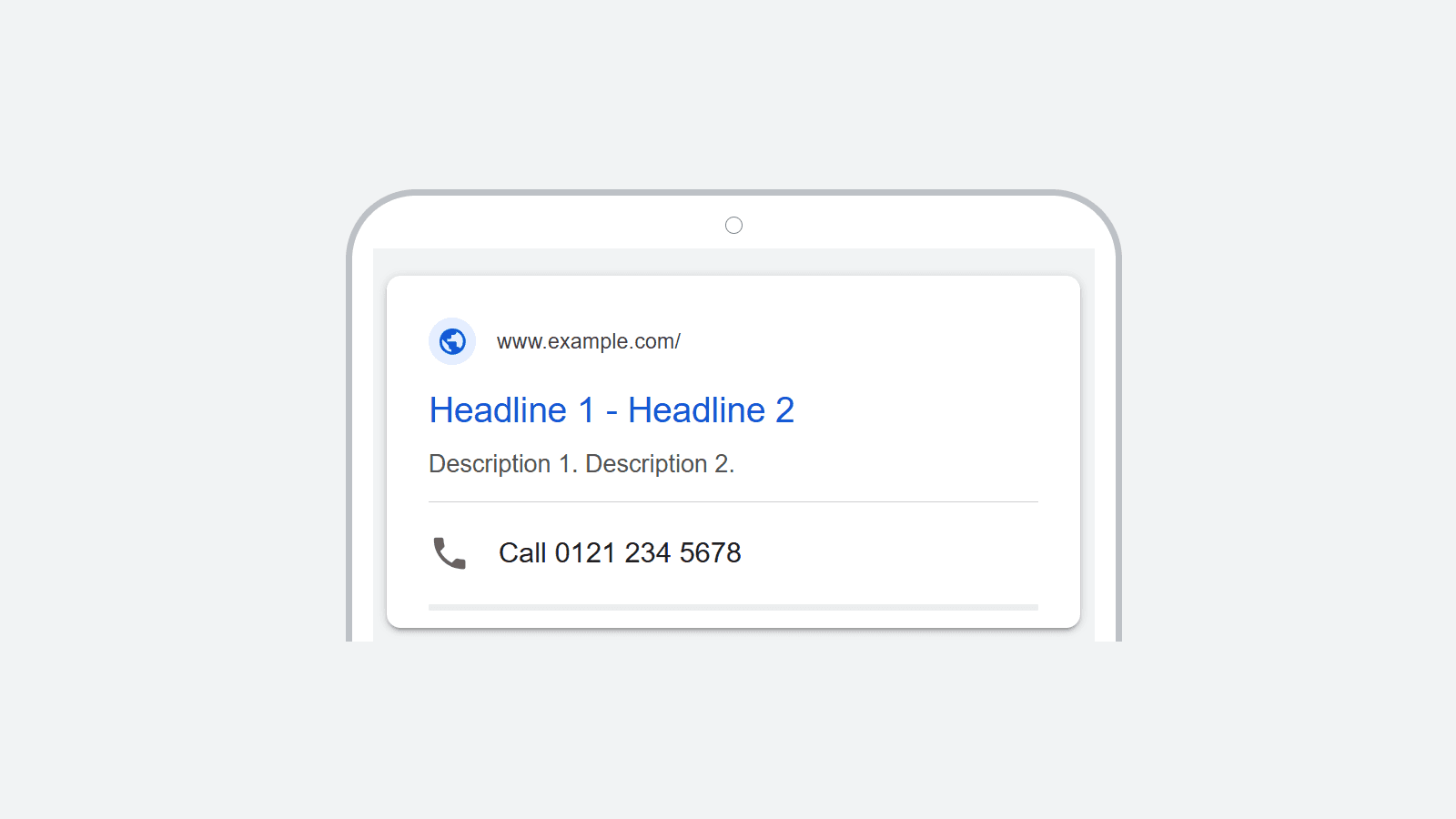
What Google does with them is the discovery, and it took me a while to get my head around, so here it is in plain English: Google showed the same headline pieces over and over, but never the same finished headline twice. Remember that responsive search ads are built from parts. You hand Google up to 15 short headline assets and it staples two or three together each time it serves. In our fortnight sample of data in August, those individual parts repeated constantly; nearly half of all ads contained a phrase that also appeared in the same advertiser's ads on at least five other prompts. The complete assembled headline, though? Across 35,892 ads, we never once saw an advertiser serve the same one against two different prompts. Every ad was a one-off, built from parts that weren't.
One advertiser (with 976 ad items in the fortnight dataset) shows it neatly:
Against the "best travel rewards credit card for everyday use" prompt it served "2026's Best Travel Cards - 2026's Top Credit Cards" ad.
Against the "best travel rewards credit card for travel" prompt it served "2026's Best Travel Cards - The Best Travel Credit Cards" ad. Same opening bar, different track.
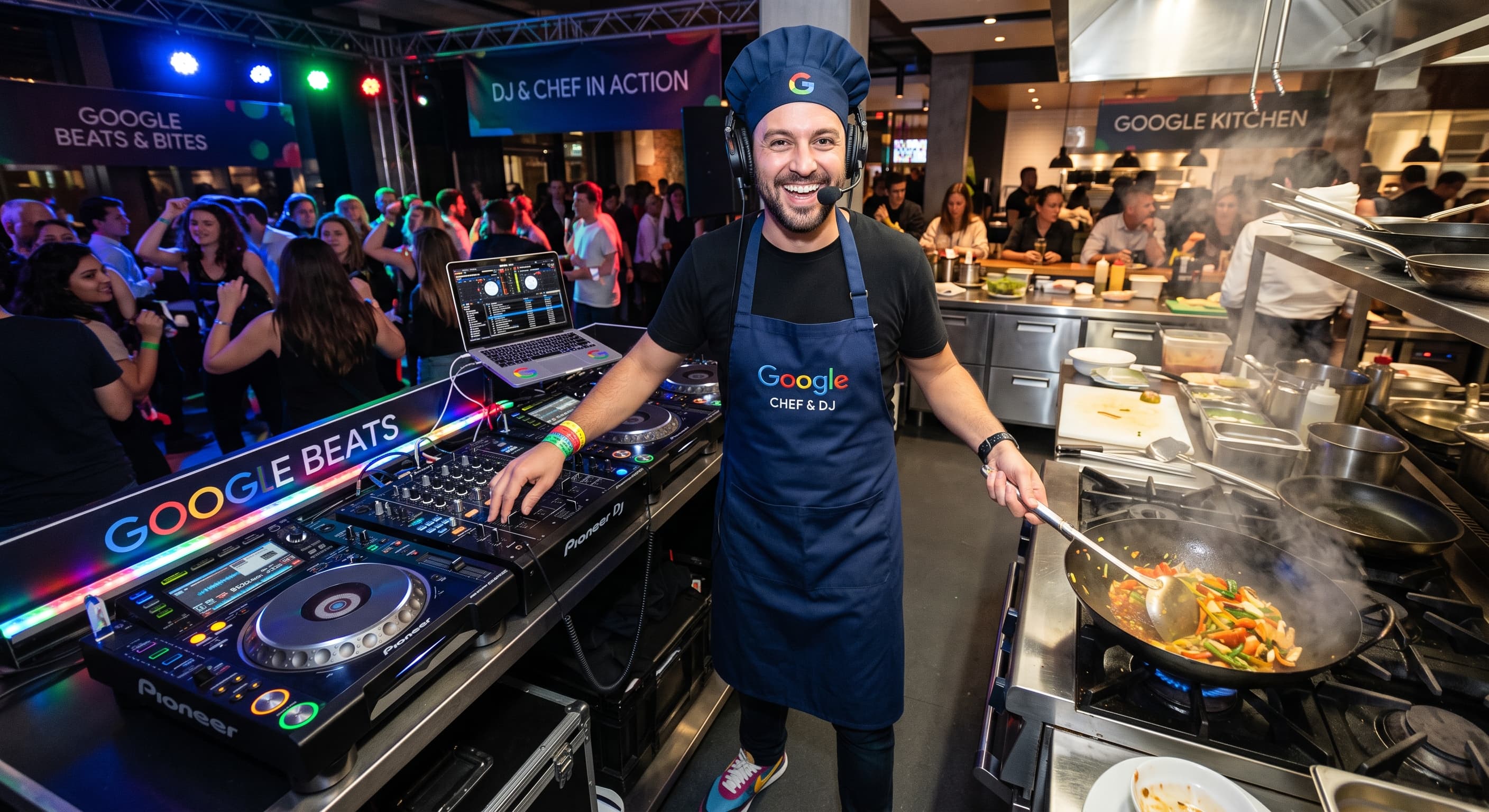
Which brings us to the title question. A DJ takes tracks somebody else recorded and mixes a set that never plays the same way twice. A chef works from a fixed ingredient list and plates something slightly different for every table. Both fit. The DJ wins on mechanics, because nothing new is being written, only recombined. The chef wins on intent, because each plate is assembled for one specific diner's order. Having stared at a fortnight of data, I'm going chef, on the grounds that a DJ at least takes requests. Either way, the bit that matters for you is the same: you supply the source material, and Google decides what gets served, conversation by conversation.
So how close does the finished plate sit in comparison to the order? Closer than I expected, without being a parrot to the prompt. Around a third of ads carried half or more of the prompt's meaningful words in the headline alone, while roughly a quarter shared none at all, which fits a system matching on meaning rather than strings. When it works, the effect is uncanny. Someone asks "what is the best auto insurance company in the US" and an insurance aggregator appears with "Best Car Insurance 2026 - Just Released Aug 2026 Rates - Starting at $29/Month". It reads like part of the answer, which is presumably the point.
There are clear patterns in what makes it onto the menu, too. Half of all headlines contain a number, nearly a quarter use "best", a staggering 18% carry a 2026 freshness stamp, and 17% lead with a price or percentage. In the body copy, speed dominates (about one in five ads promises something fast, instant or "in minutes"), followed by big-number social proof. Specific, numeric, current-sounding ingredients are the base ingredients to Google Chef's ad recipes.
Two of Adthena's Q2 findings still frame all of this. Regulated categories remain largely dark on AI Mode: Legal served zero ads in our US tracking, with Healthcare at 0.38%, Pharma at 0.21% and Banking at zero, so if you're in a regulated vertical, this surface mostly isn't serving you yet. And brand searches still rarely trigger AI ad placements, unchanged since Q1. Warning, if your paid strategy leans heavily on defending your own brand terms, you may be pretty invisible in AI search.
What I'd do before it lands in the UK
Nothing here requires panic, but a few things are worth doing while it's still in someone else's market.
Check your exposure. If you run PMax, Shopping or have AI Max or Broad Match in the US, you're already serving in AI Mode, so start baselining those campaigns now. If you're UK only, audit which campaigns would become eligible on day one. Look at your generic and category coverage with fresh eyes too, since brand-heavy accounts have the most to lose on a surface that ignores brand queries. Above all, reread your RSA assets as ingredients rather than finished ads, because that's how this surface treats them. Segments carrying a number, a price or a current year seem to be earning their place in the assembled headlines we're capturing, so stock the larder accordingly.
The UK got AI Mode a year ago. The ads are the only bit missing, and whether you picture what's coming as a DJ set or a tasting menu, the residency is heading here.
Sources & Further Reading
- Adthena: AI Search Ads: The Advertiser Intelligence Report (Q2 2026)https://hubs.li/Q04qF_jx0
- Google Ads Help: About ads and AI Overviewshttps://support.google.com/google-ads/answer/16297775?hl=en
- Google: Ads in AI Mode announcementhttps://business.google.com/us/accelerate/announcements/ads-in-ai-mode/
- Search Engine Land: Google expands ads in AI Overviews, AI Mode to desktophttps://searchengineland.com/google-ads-ai-overviews-ai-mode-desktop-455733
- Keywords Everywhere: Google AI Mode trackerhttps://keywordseverywhere.com/news/google-ai-mode/
- Campaign: Google rolls out ads for AI Mode in the US and Indiahttps://www.campaignlive.co.uk/article/google-rolls-ads-ai-mode-us-india/1928034