How switching off Target ROAS rescued an e-commerce Google Ads account
Learn how to spot when Target ROAS is quietly choking a budget-capped Google Ads account, and why removing the target restored ROAS from 7x to 22.5x on the same spend.

Google is quietly killing accounts
In three weeks, one of our UK e-commerce clients' Google Ads went from returning £18 for every £1 spent to £7. The budget stayed the same and nothing changed in the account.
There was no tracking break, no feed disapproval and no new competitor. The campaigns kept spending about £80 a day, as they always had. They just stopped bringing back revenue.
What brought the account back wasn't a smarter target or a restructure. We stopped telling Google what ROAS to hit.
A healthy account with a fixed budget
The account is a lean UK e-commerce setup. It runs two campaigns: a Performance Max campaign covering all products and a Standard Shopping campaign for its main product category. Combined spend is capped at about £80 a day, and both campaigns bid on conversion value with a target ROAS.
In June and July the account averaged a 17x ROAS, with about £1,365 of conversion value a day. The first half of August was even better, at 18x and almost £1,470 a day. We were hitting the target, the client was happy, and we had nothing to fix.
A 61% drop in daily value on the same spend
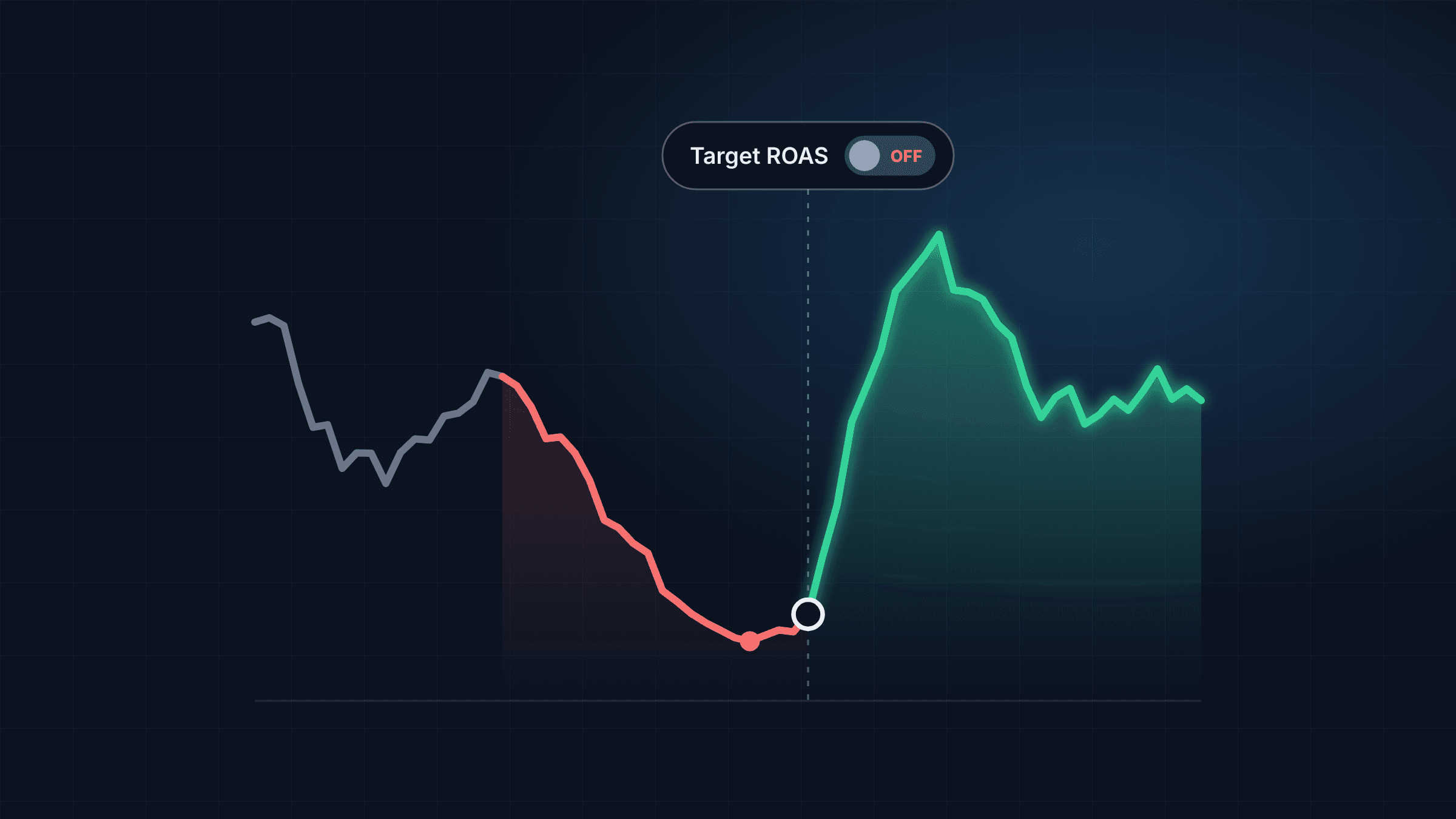
From 19 August, daily conversion value fell from about £1,470 to £570, while spend held at about £78 a day. By 4 September, rolling 7-day ROAS was down to 3.9x.
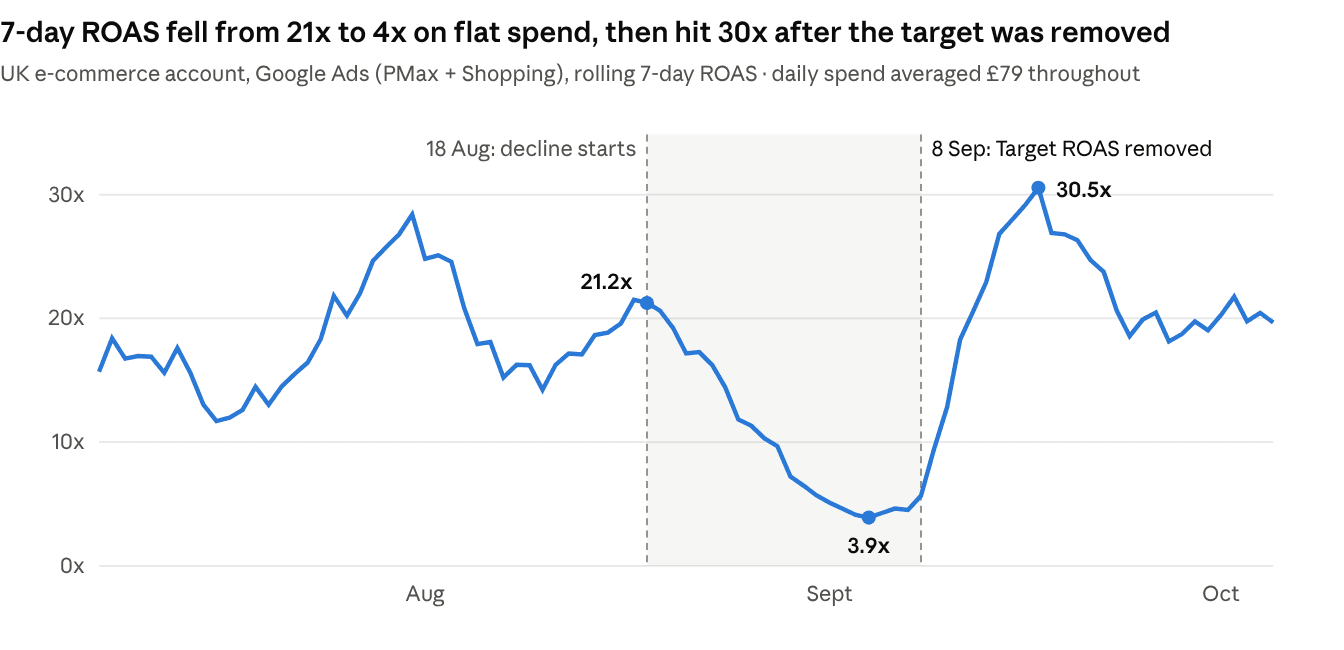
The decline began straight after 18 August, the day after Google's 17 August update. It wasn't one bad day but a steady slide over three weeks.
Why adjusting the target made it worse
The usual fix for falling ROAS is to adjust the target. We tried that, and every adjustment pushed performance down further.
Once we ruled out the usual suspects, the cause pointed to the bidding itself:
-
Spend didn't move. The account kept spending about £78 a day, so budget wasn't the issue.
-
Traffic got more expensive. Clicks fell 40% (382 to 230 a day) while CPC rose 62% (£0.21 to £0.34). We paid more for less traffic, and that traffic converted worse: conversion rate fell from 5.4% to 4.2%.
-
The timing was clean. The decline started the day after a strong 18 August and continued day after day, with no ramp-down you'd expect from seasonality or demand.
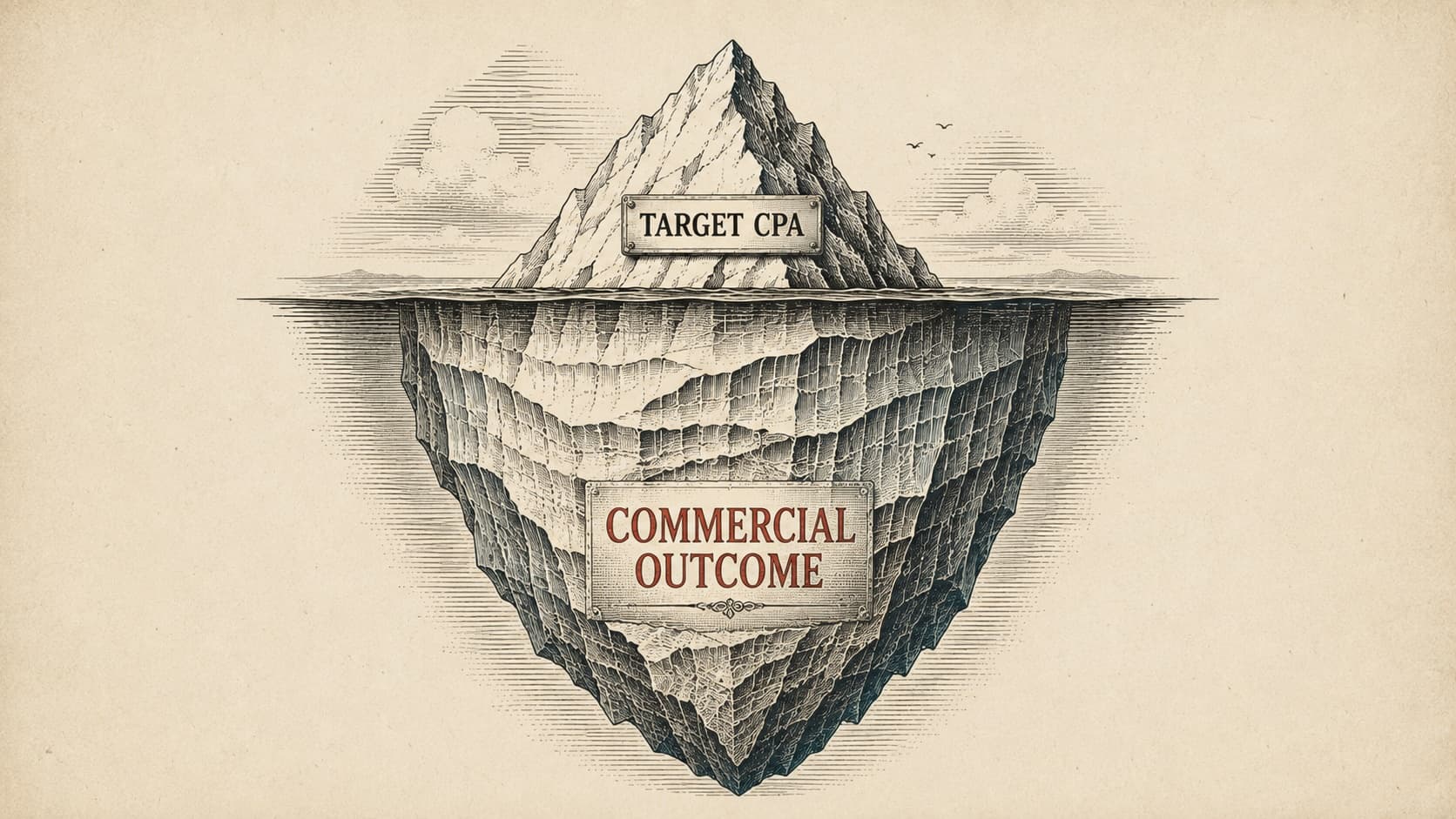
With Target ROAS, Smart Bidding only enters auctions where it predicts the target will be hit. When those predictions go off, after a model update for example, the campaign becomes more selective in the wrong auctions. A tighter target narrows it further, and a looser one doesn't tell it where the value is. In both cases, you're still working against a broken prediction.

Removing the target: 22.5x ROAS on the same budget
On 8 September we moved both campaigns from Target ROAS to Maximise Conversion Value with no target. The budget stayed at about £80 a day. Recovery started the next day, and the four weeks since have beaten every earlier period.
| Daily average | Jun, Jul | 1-18 Aug | 19 Aug - 7 Sep | 8 Sep - 5 Oct |
|---|---|---|---|---|
| Spend | £79.66 | £81.43 | £78.27 | £79.24 |
| Conv. value | £1,365 | £1,467 | £568 | £1,785 |
| ROAS | 17.1x | 18.0x | 7.3x | 22.5x |
| Conversions | 15.2 | 20.6 | 9.5 | 25.0 |
| Clicks | 346 | 382 | 230 | 519 |
| CPC | £0.23 | £0.21 | £0.34 | £0.15 |
| Conv. rate | 4.4% | 5.4% | 4.2% | 4.8% |
Compared with the pre-update period on the same spend:
- Conversion value up 22% a day (£1,467 to £1,785)
- Clicks up 36%, with CPC down 29% (£0.21 to £0.15)
- ROAS up from 18.0x to 22.5x, with no target set
Most of the gain came from Performance Max, which went from 21.0x before the update to 6.9x during the decline and 26.9x after the switch. The Shopping campaign (Shoes) went from 13x to 7.9x, then recovered to 15.3x.
Why it worked, and when it won't
The budget became the guardrail and the target got out of the way. Under Maximise Conversion Value, Smart Bidding has to spend the daily budget and chase as much value as possible within it. That makes it bid into auctions it was skipping under the target, and it re-learned quickly where value was.
What to take into your own accounts:
- Read flat spend with falling ROAS as a bidding signal. If cost holds steady while clicks fall and CPC rises, look at the bid strategy before you touch creative or the feed.
- Don't keep chasing the target. When adjusting the target makes things worse, the target is the problem.
- This works when the budget is the constraint. This account is capped at about £80 a day, so dropping the target couldn't let spend run away. On large or uncapped budgets, test it as an experiment or put a cap in place first.
- Watch the first 7 days closely. We saw recovery within 24 hours, but keep daily checks on spend, CPC and conversion value until it settles.
- Plan to bring the target back. Once performance is stable, a target set near the achieved ROAS can bring control back without choking volume.
This is one account, not a controlled test, so other changes in demand may have contributed. But a 61% drop in daily value on flat spend, followed by a full recovery the day after one bid strategy change, is a strong signal. If your account has been sliding since mid-August, check your Target ROAS campaigns first.
Sources & Further Reading
- Changes to target based bid strategies - Google Ads Helphttps://support.google.com/google-ads/answer/17061251?hl=en