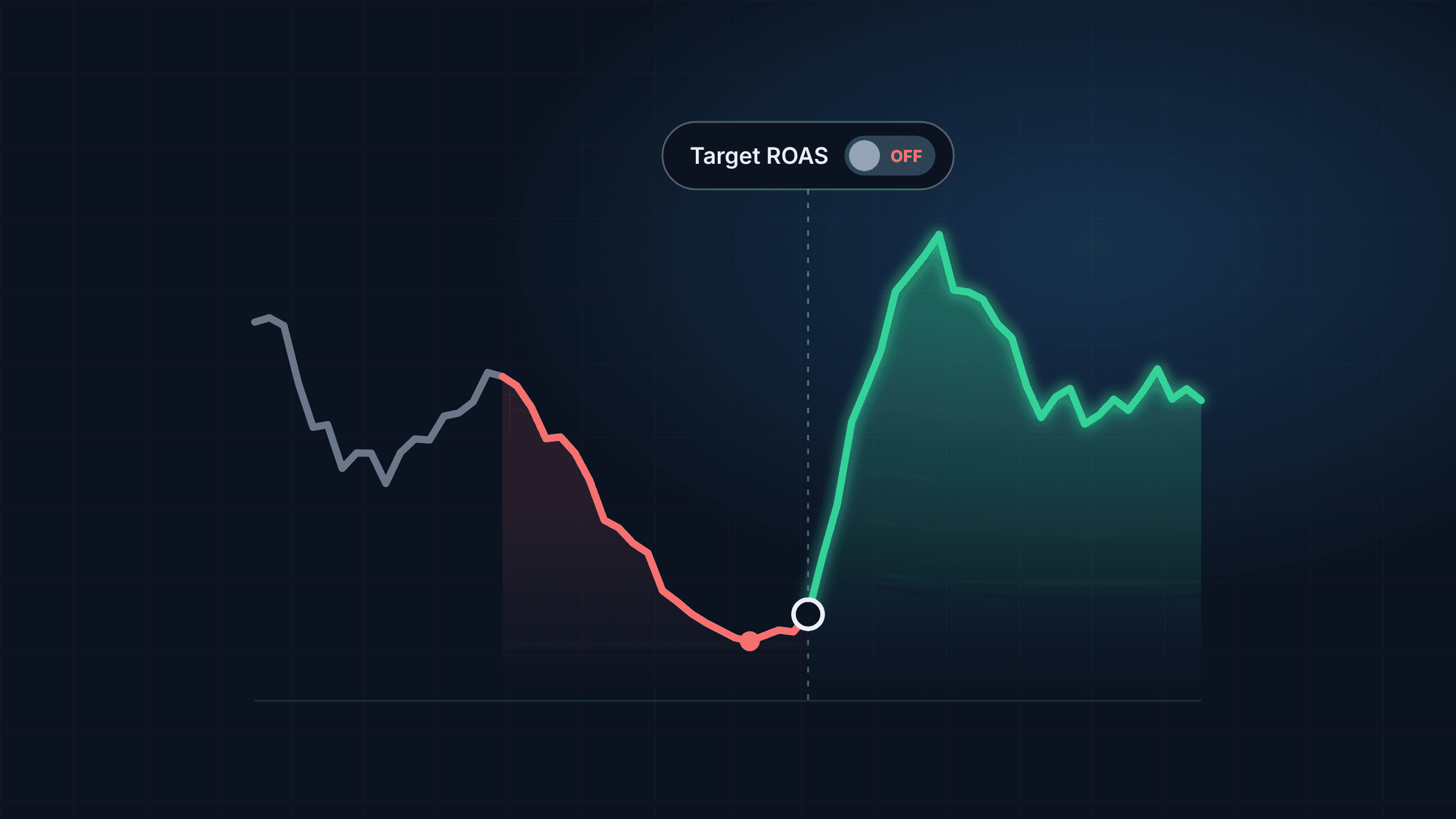
How switching off Target ROAS rescued an e-commerce Google Ads account
Learn how to spot when Target ROAS is quietly choking a budget-capped Google Ads account, and why removing the target restored ROAS from 7x to 22.5x on the same spend.


Google's AI Max for Shopping brings generative product titles and a dedicated report. Why the static feed era is ending, how this echoes SA360 inventory management, and the guardrails needed before turning it on.
You’ll learn how to move beyond basic radius targeting and use postcode-level data to scale Local Inventory Ads in the areas that matter most. The article gives you a practical framework for increasing local visibility, store visits and sales.
Google only knows what your feed tells it. Recategorising one client's 17K-product feed, no-bid, budget, or structure changes, drove +37% revenue and +32% ROAS, beating the previous peak season. Here's how it works.
Campaign-level negative keywords, granular brand exclusions, and channel-level reporting have all landed in Performance Max. Here is what actually changed and how to use it.
The debate about Performance Max versus Standard Shopping campaigns has produced more heat than light. The honest answer depends on the account, the catalogue and the measurement setup. A structured framework for making the right call for your specific situation.
Most Performance Max underperformance is a feed problem. The campaign structure and bidding get the attention, but it is the product data quality, title logic and custom labels that determine what gets served, to whom and at what margin.