What's happening in ChatGPT Ads? A round up from July 2026
We tracked 2,882 UK advertisers running ChatGPT Ads in July - here's who's winning and what the new bidding tools mean for your account.

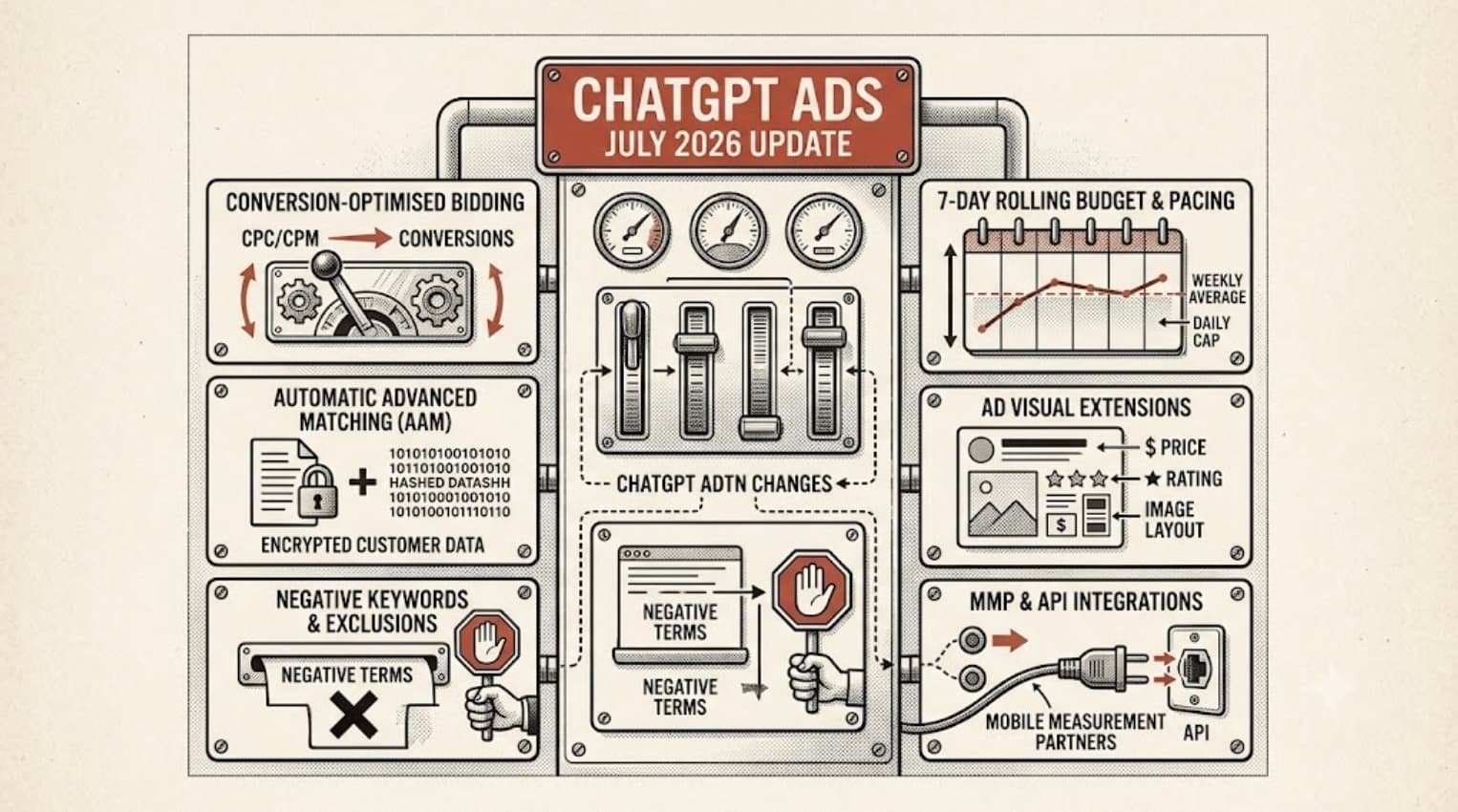
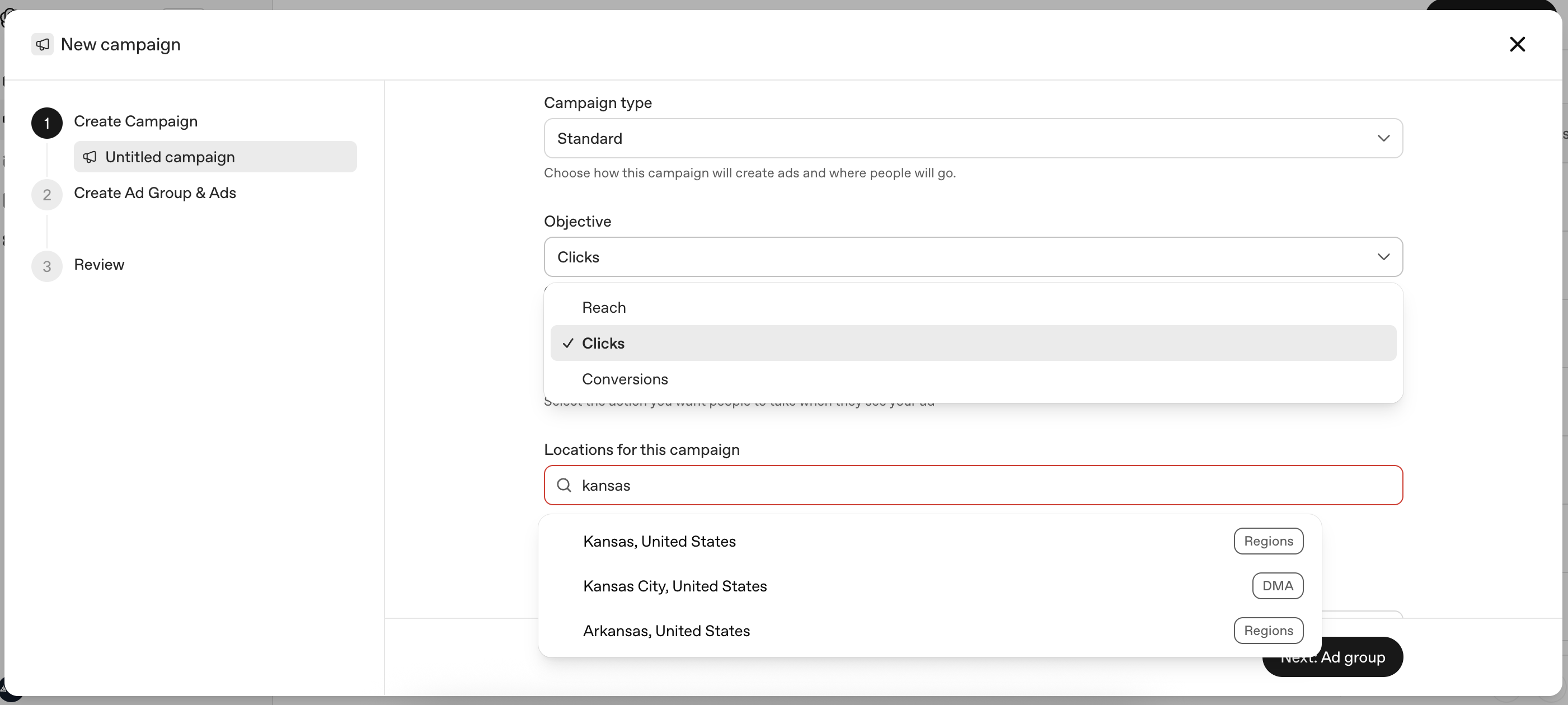
July has seen a significant wave of improvements across the ChatGPT Ads platform. OpenAI rolled out several key feature releases designed to give advertisers greater control over targeting, bidding, and campaign management, bringing its ad manager much closer to the standard capabilities of platforms like Google Ads and Meta.
Key updates at a glance:
- Conversion-Optimised Bidding: Advertisers can now directly optimise campaigns for conversions rather than relying solely on clicks or impressions.
- Automatic Advanced Matching (AAM): Enables web conversion tracking using hashed customer data to improve attribution accuracy.
- Exclusions & Targeting Controls: Added support for negative keyword exclusions, location exclusions, and audience suppression lists.
- Budgeting & Pacing Controls: Daily budgets now operate on a 7-day rolling average rather than a strict daily cap, paired with automatic 24-hour spend pacing.
- Management & Analytics: Launched bulk ad management via API alongside native Mobile Measurement Partner (MMP) integrations with AppsFlyer and Adjust.
- Ad Visual Extensions: Refreshed static ad cards featuring enhanced visual layouts, direct pricing, and star rating extensions.
What should advertisers do right now?
- Test conversion-based campaigns - this to most advertisers is likely to be the most exciting update.
- Review targeting settings - this is a quick win for campaign optimisation.
- Keep an eye on budget pacing (and don't panic if the daily budget gets exceeded!).
How is the competitive landscape shaping up?

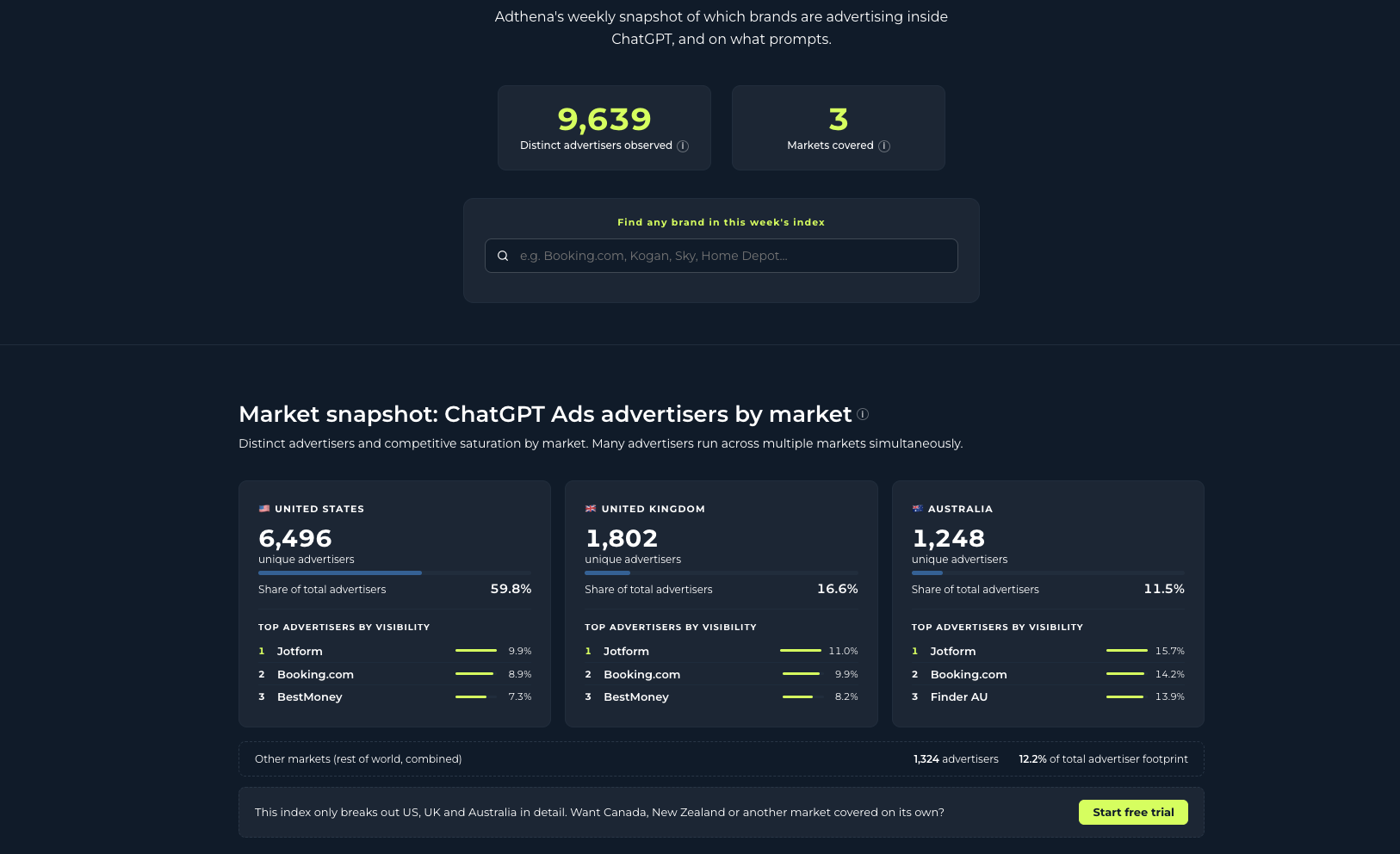
To understand how brands are adopting the platform, we analyzed UK ChatGPT Ads data for the entire month of July 2026. Across 31 days of monitoring, a total of 2,882 unique advertisers ran ads on ChatGPT in the UK, demonstrating rapid adoption across retail, travel, SaaS, and home goods.
While our weekly ChatGPT Ad Index tracks broader international trends, narrowing the analysis specifically to the UK provides a clear picture of how competitive dynamics are shaping up closer to home.
Key Takeaways from the July Data
- Fashion & e-commerce lead: Major fashion retailers like Zalando, Next, Roman, and Tesco F&F represent a significant portion of ads, leveraging ChatGPT's conversational prompt matching for product discovery queries.
- Travel aggregators capturing high-intent searches: Booking.com and Jet2holidays were highly visible across travel-related recommendations and itinerary planning queries.
- Not just enterprise: With nearly 2,900 distinct brands running campaigns in a single month, medium-sized businesses and niche direct-to-consumer (DTC) brands are actively testing the platform alongside major enterprise advertisers.
Key Ad Copy Insights from the July UK Dataset
-
Compact copy: headlines average 35 characters and descriptions on average had 121 characters. Advertisers may be keeping these brief to avoid truncation.
-
Reassurance & reducing friction: e-commerce and travel advertisers heavily prioritise trust and reducing buying friction in ad copy. Terms like "ABTA & ATOL-protected" and "Free delivery" appear consistently.
-
Promotional & offer-led: 1 in 5 ads include explicit promotional triggers, discount codes, or booking incentives.