CMA tells UK retailers to put mandatory delivery fees in every price
The CMA's open letter of 2 November 2026 says any price shown in an advert must include mandatory delivery. With Christmas trading close, check ad copy and checkout totals now.


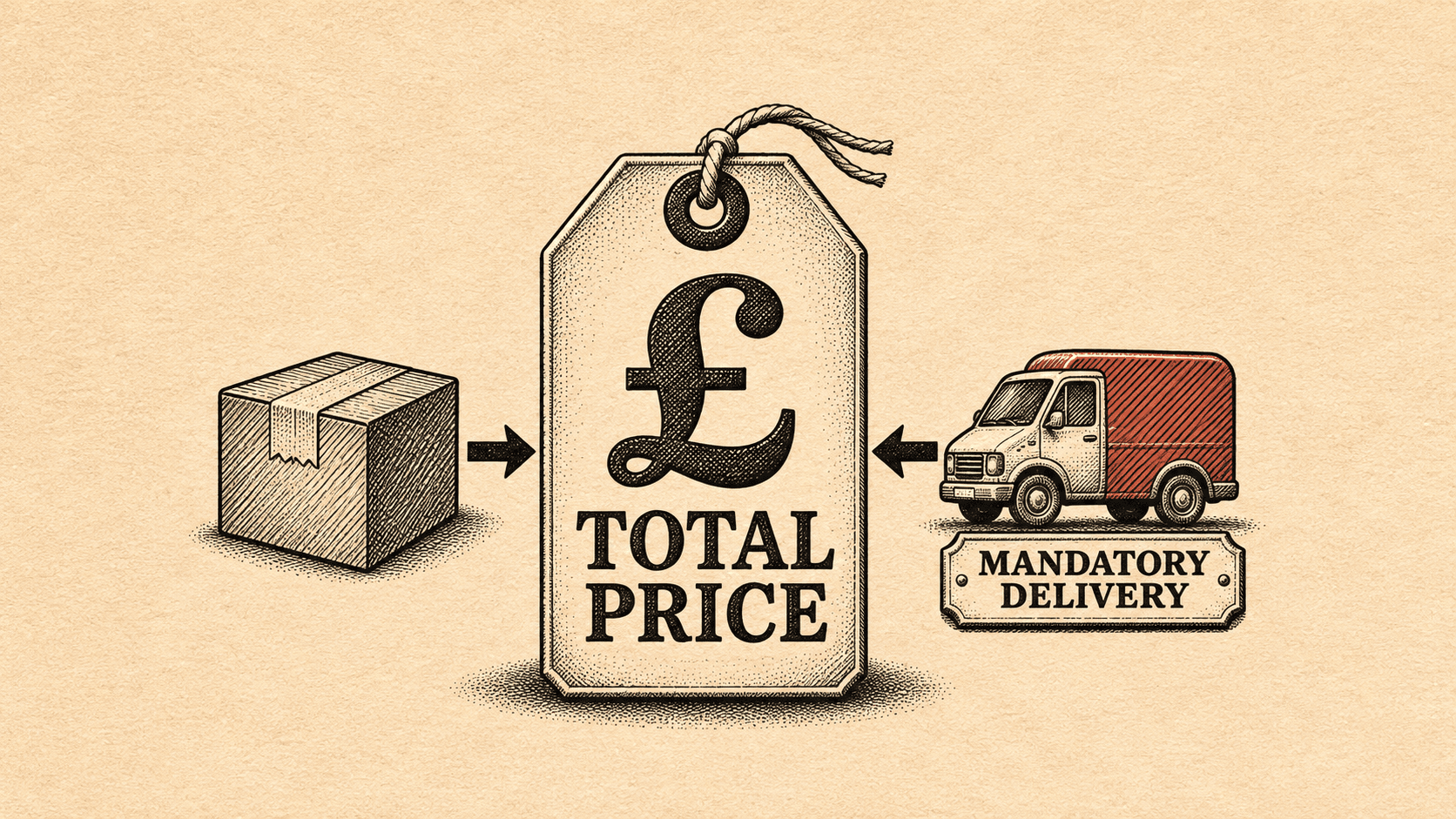
The Competition and Markets Authority (CMA) wrote to UK online retailers on 2 November 2026 to say that any price shown to a customer must include the minimum mandatory delivery charge, and that this covers advertising as well as the basket. The open letter also reaches marketplaces, comparison sites and search engines that show prices from several retailers. No deadline is given, but the CMA ties the timing to the Christmas shopping period, so anyone writing or managing retail ads has a reason to check now.
What changed
This is a reminder of existing law, not a new rule. The CMA says it is enforcing the price transparency requirements of the Digital Markets, Competition and Consumers Act 2024 (the DMCC Act), which are already in force. Its detailed guidance (CMA209) was published in November 2025. Nothing in the letter is a pilot or a staged rollout, and it announces no platform changes.
What the letter says is required:
- Where a customer must pay a delivery charge, the total price including the minimum mandatory delivery charge must be shown "throughout the sales process".
- The total price must be given "at every stage of the purchase process where a price is given, including advertising, product pages, carts and baskets, checkout and payment pages".
- The total must also include any other unavoidable fees, taxes and charges.
- Where one flat delivery charge applies to a whole basket, the retailer must still show the total price of each product including that charge. A breakdown is allowed, and the CMA suggests a retailer could display the price both including and excluding delivery.
- Where delivery charges are optional, retailers must say clearly throughout the process that they apply. If the amount cannot reasonably be calculated in advance, they must explain that an additional charge may be payable. Customers should not have to search "separate pages, hidden menus or expandable sections".
- Marketplaces, comparison sites and search engines are covered. Where a marketplace lists items from different traders, each with its own delivery charge, the delivery price should be included in the total price of each product. A base price excluding delivery can be shown alongside, provided the total is clear, timely and likely to be seen.
The CMA lists four practices it is looking for: showing a product price without the mandatory delivery charge in the total, leaving mandatory delivery out of basket totals or order summaries, hiding optional delivery information behind links, separate pages, pop-out pages, expandable sections or drop-down menus, and not mentioning delivery charges until late in checkout.
The letter puts the principle plainly: "The first price consumers see should be the price they pay." (CMA, GOV.UK)
On enforcement, the CMA says it has already enforced the drip pricing rules against 4 businesses, with fines totalling more than £5.1 million and more than £1.35 million in refunds for affected consumers. It says it will keep monitoring the online retail sector and is committed to action "if it appears non-compliance is continuing".

What this means for specialists
The letter names advertising in the same list as product pages and checkout. An advert that shows a price is, on the CMA's reading, an invitation to purchase, so the price in it needs to be the total. A price that is correct on the landing page but lower in the advert is the gap the letter describes.
That makes this a shared job. The people who write ad copy or manage whatever price data feeds the adverts need to know how delivery is charged for each product. The people who run the site need to confirm the basket and checkout agree with what the advert said. If either side assumes the other has handled it, a price excluding delivery can survive somewhere in the journey.
The flat basket charge is worth thinking through. The CMA says a single charge across an order does not remove the duty to show a total price for each product. The permitted option of showing prices both including and excluding delivery may help retailers who want to keep the base figure visible, though the letter does not say which approach suits which business. CMA209 has the examples.
For agencies, the letter is also a reason to put compliance in writing. The CMA says it expects businesses to review their website, mobile app and online advertising, and clients may ask who owns the advertising part of that review.
What to do this week
- Open a sample of live adverts for each UK retail client and compare the price shown with the price on the product page once the minimum mandatory delivery charge is added. Note every mismatch.
- For each client, find out which products carry a mandatory delivery charge and whether the charge is per product or flat for the basket. Record it somewhere the ad team can see.
- Walk through a purchase from advert to payment page and check that each stage that shows a price shows the total including mandatory delivery, including the basket total and order summary.
- Where delivery is optional, check that the charge is stated clearly throughout the journey and is not behind a link, pop-out page, expandable section or drop-down menu.
- Check when delivery charges first appear in checkout. The CMA names late disclosure as a concern.
- Read Chapter 4 and paragraphs 5.2 to 5.21 of CMA209, the parts the letter singles out, and share them with whoever owns site pricing.
- If a client sells through a marketplace or appears on comparison sites, check whether the price shown there includes delivery for each product.
What we do not know yet
- The letter sets no deadline. It says to review "now" and refers to the approach of Christmas, but gives no date by which changes must be made.
- It does not say how the CMA will choose which businesses to examine, or whether particular sectors are a priority beyond online retail generally.
- It does not describe the four earlier cases beyond the totals, so we cannot say what the breaches looked like.
- It does not address how individual advertising platforms display prices, or what responsibility rests with a platform as against an advertiser. Search engines are named as covered when they show prices from multiple retailers, but the letter gives no detail on what that means in practice.
- It does not say how the CMA will treat price ranges or "from" prices. Retailers with several delivery options will need to work this out from CMA209.
Sources & Further Reading
- gov.uk: Open letter to online retailers: including mandatory delivery fees in the total price -...https://www.gov.uk/government/publications/online-retailers-including-mandatory-delivery-fees-in-the-total-price/open-letter-to-online-retailers-including-mandatory-delivery-fees-in-the-total-price