OpenAI adds Businesses in ChatGPT: profiles, click data, agents
OpenAI's Businesses in ChatGPT beta lets verified brands manage their details and product feeds and see mentions and website clicks. Business Agents are live for eligible US firms.


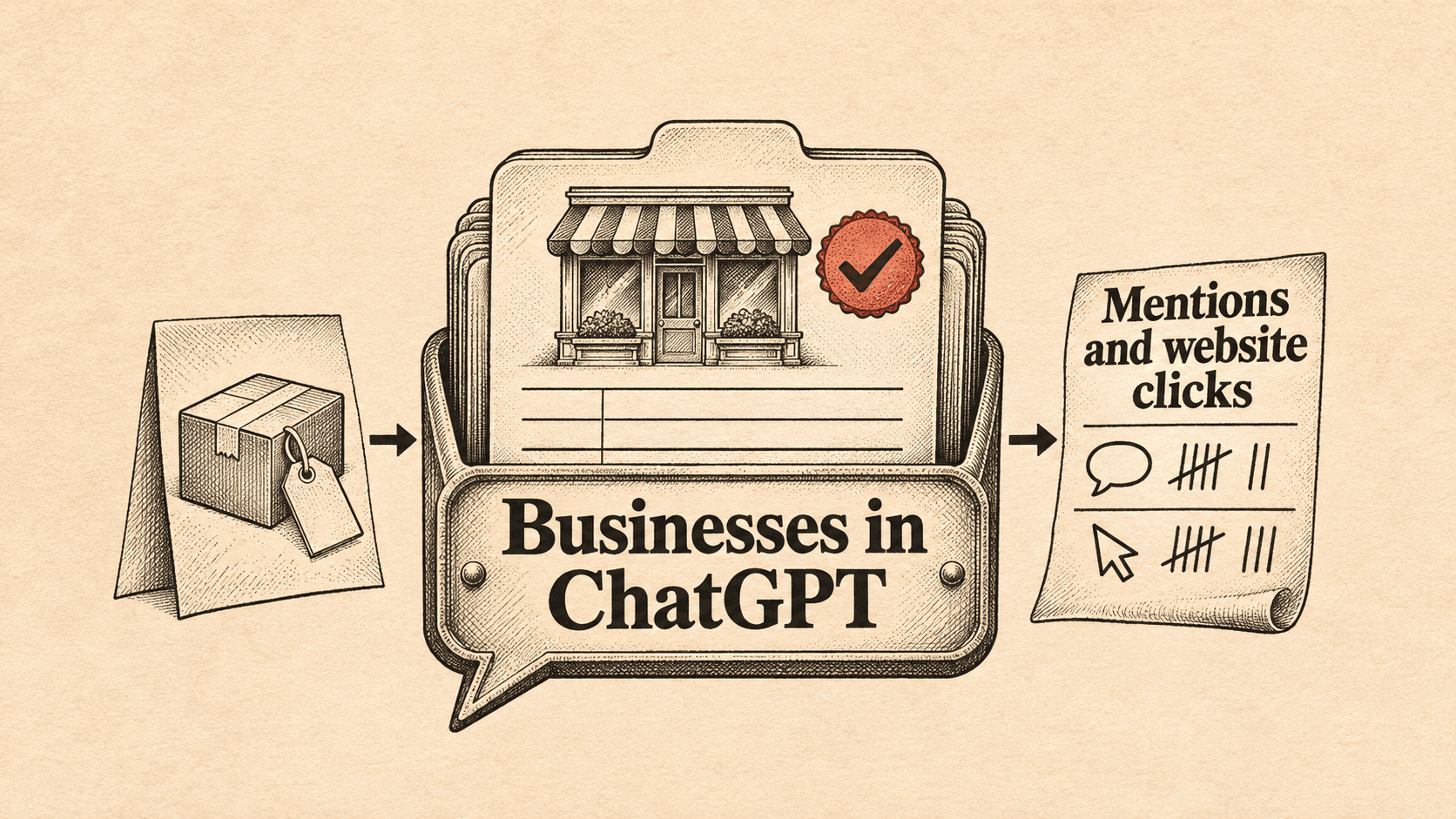
Brands can now claim and manage their presence in ChatGPT, and see how often they are mentioned and clicked, after OpenAI announced Businesses in ChatGPT in beta on 10 November 2026. Business Agents, a branded chat with the business, are available to eligible ecommerce and online service businesses in the US, and can be sponsored as the destination for ChatGPT Ads. OpenAI says ChatGPT is used by 1.2 billion people each week.
What changed
Beta: Businesses in ChatGPT and Business Hub
Through Business Hub, a company can claim its organisation in ChatGPT. Once verified, it can update key details and add self-service product feeds with pricing and availability. OpenAI says this gives ChatGPT the most accurate and up-to-date details when people explore products and services.
OpenAI says any eligible business located where ChatGPT is available can claim. Existing OpenAI Enterprise customers and advertisers can work with their OpenAI representative to claim. Shopify merchants can connect their store from Business Hub or the Shopify admin to speed up verification, and OpenAI says eligible products from Shopify merchants are already integrated into ChatGPT through Shopify Catalog.
Insights in Business Hub
Business Hub gives aggregated insights into how people engage with a business in ChatGPT. The source names the number of mentions and website clicks, plus discovery topics, which OpenAI describes as common themes across conversations where the business's website is cited. OpenAI says it does not share users' conversations or Business Agent chats with businesses, and that insights are only available when there are enough conversations or interactions to meet certain thresholds. It does not publish those thresholds.
Available now in the US: Business Agents
After claiming, eligible organisations can build, test and launch a Business Agent. When a business appears in a model response, people can click through to its ChatGPT profile and, if an agent exists, start a conversation to ask follow-up questions. OpenAI says that conversation is clearly labelled, separate from the customer's original ChatGPT conversation, and distinct from ChatGPT's independent answers.
Businesses can also sponsor their Business Agent and use it as the destination for ChatGPT Ads. In OpenAI's words: "Sponsored placements are clearly labeled and separate from ChatGPT responses." Business Agents are available to eligible ecommerce and online service businesses in the United States, with eligible categories listed on a page OpenAI links to.
Planned
OpenAI says that over time it plans to expand Businesses in ChatGPT and Business Agents to more markets and business categories, and to build tools for organisations with more complex needs. It gives no dates.
The Business Agents Policy
OpenAI's Business Agents Policy, updated 10 November 2026, sets the rules for agents. An agent must be clear that it is AI representing the business, and must not appear to be an independent adviser, a human, or endorsed by OpenAI. Businesses must not instruct it to invent offerings, prices, availability, credentials, reviews, guarantees or results, or hide material fees, conditions or limitations. It must not pressure people, create false urgency, or keep pushing a sale after someone declines. The policy says OpenAI considers both the business category and the intended use before allowing publication, and that business verification alone does not guarantee agent eligibility. It also says additional advertising policies may apply when an agent is promoted through an ad.
What this means for specialists
The practical shift is that there is now a place where a brand supplies its own details to ChatGPT and gets reporting back. Business Hub offers counts of mentions and website clicks, and discovery topics showing where the site is cited. Treat these as OpenAI's own aggregated figures. The source does not describe how a click is counted, so they are a baseline to track over time, not something to reconcile with other reporting.
The product feed route matters most for ecommerce accounts. If pricing and availability in a feed differ from the site, the policy language on accuracy and on not hiding material fees suggests that mismatch is a problem to fix at source. That is an implication, not a stated enforcement rule for feeds: the policy points to separate Commerce policies for product feeds, which are not reproduced in the sources.
For paid teams, the link between the claimed profile and sponsored Business Agents is the point to watch. A sponsored Business Agent can be the destination for ChatGPT Ads, so the agent's content and behaviour become part of the landing experience, and it is held to the policy above. Whoever owns the brand's customer-facing claims, rather than the ad account alone, probably needs to sign off the agent's instructions.
Shopify merchants can connect their store from Business Hub or the Shopify admin to speed up verification. Existing OpenAI Enterprise customers and advertisers can also work directly with their OpenAI representative to claim their business.
What to do this week
- Open Business Hub and check whether each client business can claim its organisation where ChatGPT is available. For OpenAI Enterprise customers and advertisers, ask the OpenAI representative how to claim.
- For Shopify clients, check whether the store can be connected from Business Hub or the Shopify admin, and whether its eligible products already appear through Shopify Catalog.
- Once verified, check the key details on each profile, and compare any product feed pricing and availability with the live site.
- Record a dated baseline of mentions, website clicks and discovery topics for each claimed business, and note whenever a figure is missing because thresholds were not met.
- For US ecommerce and online service clients, open the eligible categories page OpenAI links to and check whether the business qualifies for a Business Agent.
- Read the Business Agents Policy before anyone drafts agent instructions, and check them against its rules on AI disclosure, accurate prices and availability, and material fees.
- If a client wants to sponsor an agent for ChatGPT Ads, ask which additional advertising policies apply before committing budget.
What we do not know yet
- Dates. OpenAI gives none for expansion to more markets, more business categories or tools for complex organisations.
- Eligibility. The source says "eligible" repeatedly and defines it only by pointing to a categories page. How verification works for businesses outside Shopify or Enterprise is not set out.
- Thresholds. The levels at which insights appear are not published, so small businesses may see little.
- Measurement detail. The source does not say how mentions and website clicks are counted, what time periods are available, or whether data can be exported.
- Ads. It does not describe pricing, targeting or reporting for sponsored Business Agents, or how they sit within ChatGPT Ads.
- Feeds. The feed format and the Commerce policies for product feeds are not covered in the sources.
- Effect on visibility. Neither source says whether claiming a profile or supplying a feed changes how often a business appears in answers.
Sources & Further Reading
- OpenAI: Introducing Businesses in ChatGPThttps://openai.com/index/introducing-businesses-chatgpt
- OpenAI: Business Agents Policyhttps://openai.com/policies/business-agents-policy/