Google Ads API to remove Demand Gen campaign-level Display opt-out
From the week of 1 December 2026, Demand Gen campaigns can no longer opt out of Display at campaign level. Scripts that try will error, and some ad groups will be paused.


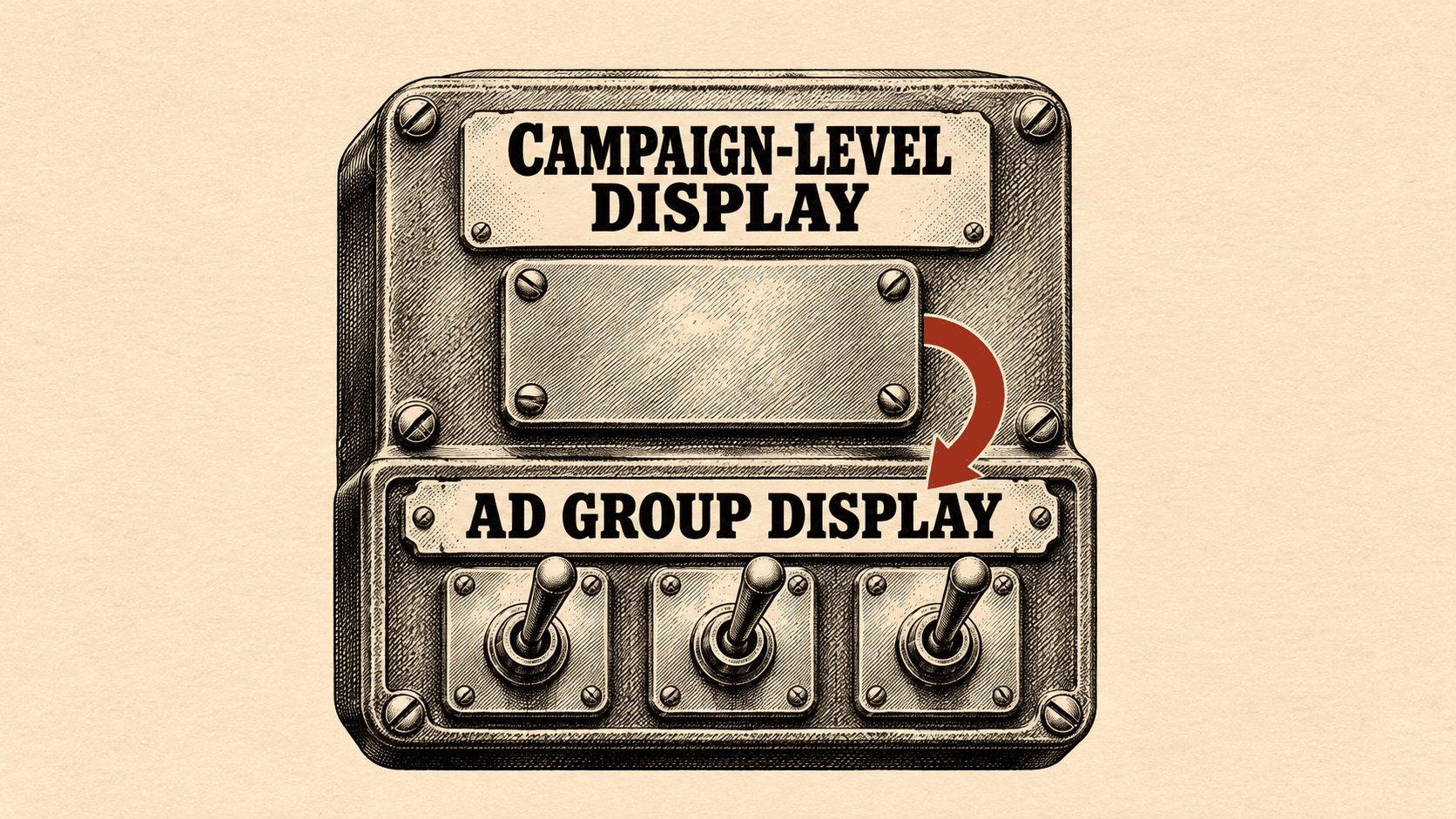
Any script or integration that creates Demand Gen campaigns with Display switched off at campaign level will start returning errors from the week of 1 December 2026, and the same change pauses some existing ad groups. Google set this out on the Google Ads Developer Blog on 9 November 2026. Nothing here is live yet: every change in the post is dated to that week.
What changed
The campaign-level field network_settings.target_content_network stops being a real switch for Demand Gen. Display targeting will instead be managed at ad group level, using demand_gen_ad_group_settings.channel_controls.selected_channels.display and channel strategies.
Rolling out from the week of 1 December 2026 (the post gives no more precise date):
- New Demand Gen campaigns default
target_content_networktotrue, where it wasfalsebefore. - You can no longer set the field to
falseat campaign level. Setting it on creation or update returns anOPERATION_NOT_PERMITTED_FOR_CONTEXTerror. - Existing campaigns currently set to
falseare updated totrue, with automatic changes to their ad groups.
The backfill treats ad groups in four ways, according to the post:
- Where Display is already opted out at both campaign and ad group level, the campaign flag becomes
trueand the ad groups are untouched. - Ad groups using the
ALL_CHANNELSstrategy becomeALL_OWNED_AND_OPERATED_CHANNELS. - Ad groups targeting Display alongside other channels get
selected_channels.displayset explicitly tofalse. - Ad groups that only target Display, while Display was opted out at campaign level, are set to
PAUSEDwith their channel controls left intact. Google explains that Demand Gen ad groups must target at least one channel, so turning Display off would leave them with none, which is an invalid configuration.
Google says the reason for the change is that disabling Display at campaign level used to override the ad group setting. Managing it only at ad group level, it says, removes that dual-level configuration and keeps channel representation consistent across the Google Ads API, the Google Ads UI and Google Ads Editor.
On serving, the developer blog states: "Overall default campaign serving behavior will remain unchanged." The reasoning given is that ad group channel controls default to Display off, so new campaigns still target owned and operated inventory unless Display is explicitly opted in. Google also says none of the backfilled campaigns will change serving behaviour, because they are already opted out of Display. That is Google's description, and the audit below is how you check it against your own accounts.
For opting out through the API, the post's example sets display to false inside demandGenAdGroupSettings.channelControls.selectedChannels alongside the other channel flags (youtubeInStream, youtubeInFeed, youtubeShorts, discover, gmail). It also says you can set channel_strategy to ALL_OWNED_AND_OPERATED_CHANNELS as a high-level way to opt out of Display without listing every channel.

What this means for specialists
For anyone building or running Demand Gen through the API, the immediate risk is a failing call. A creation payload or script that sends target_content_network = false will be rejected after the change, so campaign creation could stop partway through a workflow rather than degrade quietly. The error is specific enough to search logs for.
The second consequence is for people who never touch the API. If a campaign had Display off at campaign level, the ad group setting was overridden, so ad group settings in those campaigns may not match what you assume. The backfill rewrites some of them: strategies change, Display flags are set to false, and Display-only ad groups are paused. Google says serving does not change. The backfill will set Display-only ad groups in campaigns with target_content_network = false to PAUSED, preserving their existing non-serving status.
It is also a reasoned implication, not something the post states, that any reporting or naming convention that relied on the campaign-level flag to describe a campaign's channel mix is now out of date. Channel reach is read from the ad group.
What to do this week
- Search your scripts, integrations and automated workflows that create or update Demand Gen campaigns for
network_settings.target_content_network, and remove any place that sets it tofalse. - Replace those opt-outs with ad group
channel_controls.selected_channels.displayset tofalse, or with theALL_OWNED_AND_OPERATED_CHANNELSchannel strategy. - Run the audit query from the post across your Demand Gen campaigns. As pasted on the blog it appears to lack a comma after
ad_group.status, so check it parses before you rely on the output. - In the results, filter for campaigns where
target_content_networkisfalseand note any ad group that only targets Display. Those are the ones the backfill will set toPAUSED. - In the same results, list ad groups on
ALL_CHANNELSand ad groups with Display selected alongside other channels in those campaigns, so you know which will be changed toALL_OWNED_AND_OPERATED_CHANNELSor have Display set tofalse.
What we do not know yet
- The exact day. Google gives only "the week of December 1, 2026", for both the new rule and the backfill, and does not say whether they land together.
- Whether sending
trueexplicitly is accepted. The post says setting the field tofalseerrors on creation or update, and is not explicit about other values. - What happens if you re-enable an ad group the backfill has paused. The post says only that it keeps its non-serving status and its channel controls.
- Which API versions are affected, and whether any markets or account types are treated differently. The post names none.
- What changes in the UI or Google Ads Editor beyond Google's statement that representation will be consistent across them.
Google points questions to its "Google Advertising and Measurement Community" Discord server.
Sources & Further Reading
- ads-developers.googleblog.com: Google Ads Developer Blog: Display targeting changes in Demand Gen campaigns starting t...http://ads-developers.googleblog.com/2026/11/display-targeting-changes-in-demand-gen.html