Google Ads to verify US and Canada financial advertisers in 2027
Google says Financial Services Verification will launch in the US and Canada in early 2027, adding a regulator or registry check on top of identity verification. Finance accounts should prepare.


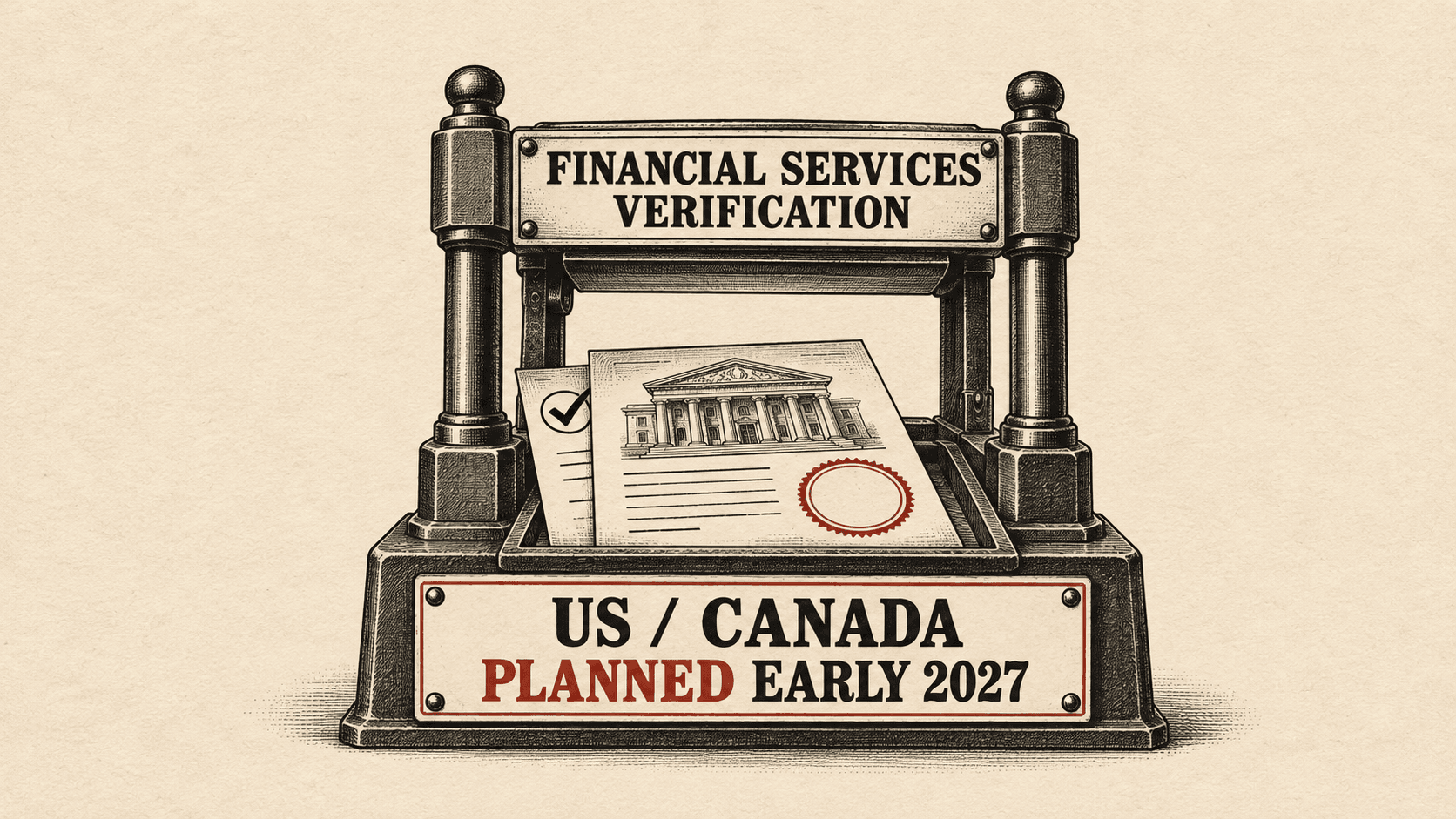
Advertisers running banking, card, loan or investment ads in the US or Canada should expect a new credential check on top of identity verification. Google announced on 20 October 2026 that it will bring Financial Services Verification to both markets in "early 2027". The post is by Keerat Sharma, VP and General Manager, Ads Privacy and Safety. It gives no enforcement date.
What changed
Planned, not live. Google's blog says it is "bringing our Financial Services Verification program to the U.S. and Canada in early 2027". The rollout is phased: Google says that because regulations differ across borders, it is adapting its approach for each country.
The requirement itself, in Google's words: "advertisers must demonstrate they are authorized by relevant regulators or recognized registries before running certain financial ads". Google says this adds a specialised credential check on top of identity verification, which it calls its "longstanding first line of defence".
Registries named so far.
- US: Google says it is working with the American Bankers Association to use its dedicated registry to verify authorised banks before ads can run.
- Canada: Google says it is "engaging closely with the Canadian Bankers Association as we prepare for our rollout". That is a statement of engagement, not a confirmed registry.
The post names banks only. It does not say how lenders, investment firms, insurers or other financial advertisers will be verified.
Still to come before enforcement. Google says that ahead of the rollout it will provide country-specific information, including accepted registries, required credentials and onboarding instructions. Once verification opens, advertisers "will be notified if and when they need to complete the process", before policy enforcement begins.
Already live elsewhere. Google says the programme started in the United Kingdom in 2021 and has most recently expanded across the European Union. It says the programme currently covers approximately 2 billion internet users across 42 countries. Google's regulators and enforcement dates page lists start dates that differ by country, from 6 September 2021 for the UK to 15 September 2026 for several EU states. The US and Canada do not appear on that page, or on the location list in the Germany policy article, in the versions we read.
Google's own figures. Google says more than 97% of ads people see in the US and Canada already come from identity-verified advertisers (Google internal data, 1 September 2025 to 31 August 2026). It also says Gemini helped its systems catch over 99% of policy-violating ads before they served in 2025. Both are vendor claims and are not independently checked.
What this means for specialists
Google has not published the US or Canadian process, so the best guide is how it works in markets already live. The Germany policy article is the most detailed example in the sources, and nothing says the US or Canadian steps will match it.
In those markets, verification is needed separately for each targeted location, and applications must be submitted by an authorised representative: an admin of the Google Ads account or of the payments profile paying for the ads. Google says that includes agencies managing the account. If you run finance accounts for clients, you may be the person who has to file, so sort out admin access early. Google also describes Manager Account Certification, which can apply an existing certification to other accounts under the same manager account (MCC), with eligibility varying by advertiser and certification type.
The Germany article also shows that scope can go beyond the lender. It lists five advertiser types, including approved third parties (brokers, resellers, affiliates) and non-financial advertisers with a compelling reason to target people seeking financial services, such as car leasing and financing or travel insurance. It says verification applies to ads, or audience targeting, aimed at people who appear to be seeking certain financial services. Whether the same categories apply in the US and Canada is not stated.
Identity verification is the base layer, and Google's advertiser verification article sets out what happens around it. Financial services is one of the reasons an account can be selected. When an account is selected, some ads may be restricted until verification is completed, and in some cases Google pauses the account. A new legal name on a billing profile immediately triggers a new advertiser verification, and Google may also ask for re-verification after changes to the payments profile, billing address or business information. Financial services verification itself may need periodic renewal and can be revoked if Google finds false information or a policy breach.

What to do this week
- List every account that targets the US or Canada with banking, cards, credit and loans, investment, brokerage or insurance ads. Include accounts under manager accounts.
- Open the account page in each one and check the advertiser verification status. Google says status can take up to 5 business days to update, so do not rely on a same-day change.
- Record who the admins are on each Google Ads account and its payments profile. Those are the people who can act as the authorised representative in markets already live.
- Collect the licence and registration numbers for each advertiser and check that the legal name matches the regulator or registry entry exactly. Google's Germany article says business details must match exactly, and its advertiser verification article lists name mismatches as a common document problem.
- Check the payments profile legal name and billing address on finance accounts, and hold off non-essential changes until the US and Canadian process is published, since changes can trigger re-verification.
- Map affiliates, brokers, resellers and any non-financial advertisers (car finance, travel insurance, financial aid content) that target finance searches. For approved third parties, note which authorised advertiser approves their promotions. Record non-financial advertisers separately; their US and Canadian verification requirements are not yet stated.
- Check which email addresses receive Google Ads notifications on these accounts. Google says it notifies advertisers by in-account notification or email when verification is required.
What we do not know yet
- The launch date and enforcement date. The source says only "early 2027".
- The order of rollout between the US and Canada, and what "phased implementation" means in practice.
- Which registries and credentials will be accepted beyond the American Bankers Association registry for US banks, and whether the Canadian Bankers Association will become a registry.
- Which advertiser categories are in scope, including affiliates, non-financial advertisers and non-bank lenders and investment firms.
- Whether a third-party vendor will be involved, as with G2RS in Germany, and whether verification will be per state or province or per country.
- How long advertisers will have between notification and enforcement, and what happens to unverified ads at that point.
Google says country-specific details will come ahead of the rollout. Until then, the checks above are about having credentials and access ready, not about changing live campaigns.
Sources & Further Reading
- blog.google: Financial Services Verification coming to US and Canada 2027https://blog.google/intl/en-ca/company-news/outreach-initiatives/financial-services-verification-united-states-canada/
- support.google.com: Advertiser verification - Advertising Policies Helphttps://support.google.com/adspolicy/answer/9703665
- support.google.com: Financial Services Verification - Germany - Advertising Policies Helphttps://support.google.com/adspolicy/answer/15332527
- support.google.com: Financial Services Verification: Relevant Regulators and Enforcement Dates - Advertisin...https://support.google.com/adspolicy/answer/12390454