ASA: unbranded weight-loss pill ad on Instagram breached CAP Code
The ASA ruled on 4 November 2026 that a MedExpress Instagram story promoted prescription-only weight-loss medicines without naming one, judging the ad and its landing page together.


Leaving the medicine's name out of an ad does not protect it if the creative and the page it links to point at one. On 4 November 2026 the ASA published a ruling against MedExpress Enterprises Ltd, t/a MedExpress, over an Instagram story for "New weight loss tablets". It found a breach of CAP Code (Edition 12) rule 12.12. Anyone running UK ads for pharmacies, clinics or health brands should read it.
What changed
This is a ruling, not a new rule. The ASA says it "forms part of a wider piece of work on prescription-only medicines (POMs) used for weight loss, identified for investigation following complaints and intelligence gathered by the ASA". The ruling page points to related rulings published between 9 July 2025 and 4 November 2026.
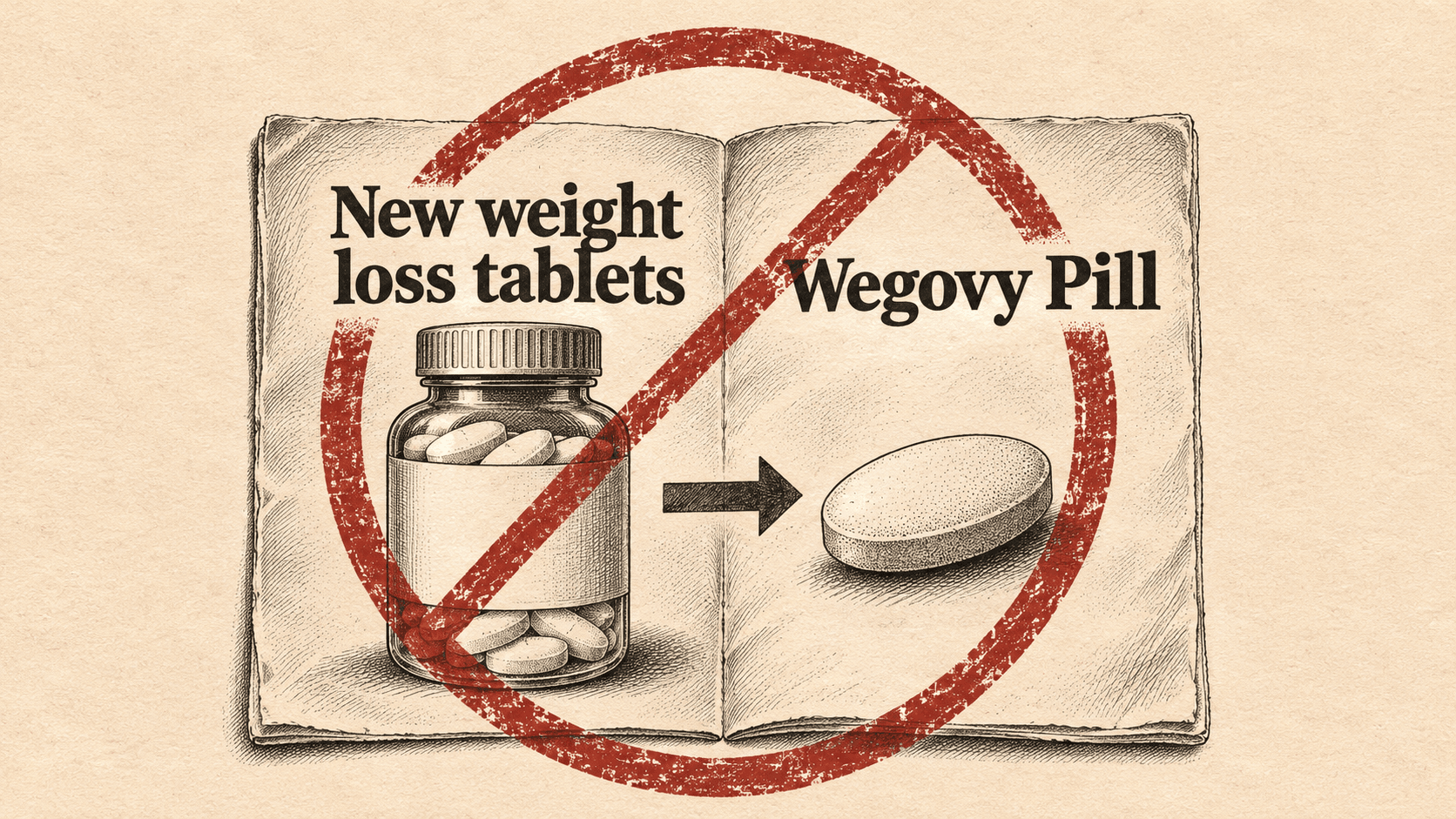
The ad. The story ran from MedExpress' account, @medexpressglobal, and was seen on 24 June 2026. It showed a semi-transparent blue bottle labelled "MedExpress" holding white pills. Large on-screen text read "New weight loss tablets". Smaller text read "Once daily pill", "No needles", "Coming soon" and "Join the waitlist". The complainant challenged whether it promoted a POM to the public.
The rule. The ASA restated the Code's position: "POMs or prescription-only medical treatments must not be advertised to the public."
How the ASA decided. It relied on its April 2026 consumer research, "How people interpret ads relating to prescription-only weight-loss medicines". It said the research showed consumers often infer meaning from the combination of imagery, language, claims and overall presentation, so a medicine can be understood as promoted even when not named. The ASA acknowledged the research predates the licensing of oral weight-loss POMs in the UK and did not examine them specifically. It still treated the research as useful evidence, while saying each ad is assessed on its own overall presentation.
The ASA concluded that many consumers would read "New weight loss tablets", "Once daily pill" and "No needles", together with the white pills in a branded bottle, as promoting a prescription-only weight-loss medicine. It also weighed the timing. The ASA understood the Wegovy (semaglutide) tablet was the first oral GLP-1 tablet approved by the MHRA, licensed as a POM on 11 June 2026, with private availability following in July 2026. The ad was seen as private availability was about to roll out, after significant press coverage, which the ASA said added to the impression.
The landing page. The ASA examined the consumer journey separately. The ad linked to a MedExpress page with text including "Wegovy Pill", "Lose an average 16.6%* of your body weight in 64 weeks" and "No injection needed". It showed a pill image carrying "novo" branding and a table comparing the Wegovy pill with a Wegovy injection pen and a Mounjaro injection pen, with images bearing the Wegovy and Mounjaro branding. The ASA noted both Wegovy and Mounjaro (tirzepatide) are classed as POMs. Because the ad directed people to a page featuring named POMs, it concluded the ad advertised a POM to the public, as a second ground for the breach.
The MHRA. The ASA sought the regulator's advice. The MHRA said an objective assessment is needed, covering the wording, whether the material is designed to persuade, the likely effect on an average well-informed consumer and the method of distribution. It also raised concern about a consumer being invited to follow "a discrete path" to those medicines, "even if the promotional message was spread across a number of pages".
The outcome. The ad must not appear again in the form investigated, and MedExpress was told not to promote POMs to the public in future. MedExpress said a routine review before it knew of the complaint had led it to discontinue the ad, and that it had been removed from all platforms. After the complaint it began a broader review of customer-facing pages and landing pages linked to by online ads.

What this means for specialists
The practical shift is in what counts as the ad. The ASA read the creative and the page behind it as one promotion, so a clean creative can still breach if the page names a POM. The reverse is also worth considering: a page that names a POM can pull an otherwise vague ad into scope.
The ruling also shows which signals the ASA treated as pointing at a medicine: weight-loss wording, dosing and format language such as "Once daily pill" and "No needles", and pill imagery. None of those named a product. For anyone writing around a restricted category, the test is the overall impression on a consumer, not whether a brand name appears.
Timing is a further factor. The ASA said news coverage of a newly licensed product added to how the ad was read. Reasonably, that suggests the same wording may be judged differently depending on what is in the news when it runs, though the ruling does not set out a general principle on this.
The ruling is against the advertiser, and it lists the agency as unconfirmed. Whoever writes the creative and chooses the destination is still the person placed to check both, because the ASA assessed them together. The practical implication for agencies and in-house teams is to review the creative and destination together.
What to do this week
- Open every live UK ad that refers to weight loss and read the wording against the ASA's examples: "New weight loss tablets", "Once daily pill" and "No needles".
- Check ad images for pills, bottles or other product shots that could suggest a medicine, as the ruling did for white pills in a branded bottle.
- Click through from each ad to its landing page and note whether the page names a POM such as Wegovy or Mounjaro.
- Check landing pages for comparison tables or images showing branded pills or injection pens, which the ASA cited.
- Walk the whole click path from ad to product pages, since the MHRA raised concern about a guided path even where the message is spread across pages.
- Look at any ad running with "Coming soon" or "Join the waitlist" wording for a weight-loss product and check what it links to.
- Read the full ruling and the ASA's April 2026 research so briefs and approvals use the ASA's own reasoning.
What we do not know yet
The ruling does not say how many people saw the story, whether it was paid for or how it was targeted. It records only that it was seen on 24 June 2026.
It gives no list of acceptable or unacceptable phrases. The ASA stresses that each ad is assessed on its overall presentation, so the examples above are findings on one ad, not a safe-word list.
The ASA accepted its April 2026 research did not examine oral weight-loss medicines. How far the findings carry over is a judgement the ruling makes for this case only.
The page also lists rulings dated 4 November 2026 against Juniper Technologies UK Ltd and Antipadia Enterprises Ltd. The text of those rulings was not part of the material for this article, so it is unclear whether their reasoning matches.
Finally, the ruling does not say what MedExpress' wider review of its pages found, or whether further action will follow.
Sources & Further Reading
- CAP: MedExpress Enterprises Ltd - ASAhttps://www.asa.org.uk/rulings/medexpress-enterprises-ltd.html