Google Ads tests Customer Journey Insights card on Overview page
Google is piloting a Customer Journey Insights card on the Google Ads Overview page, sorting users into four stages. It uses signed-in data only and does not credit individual campaigns.

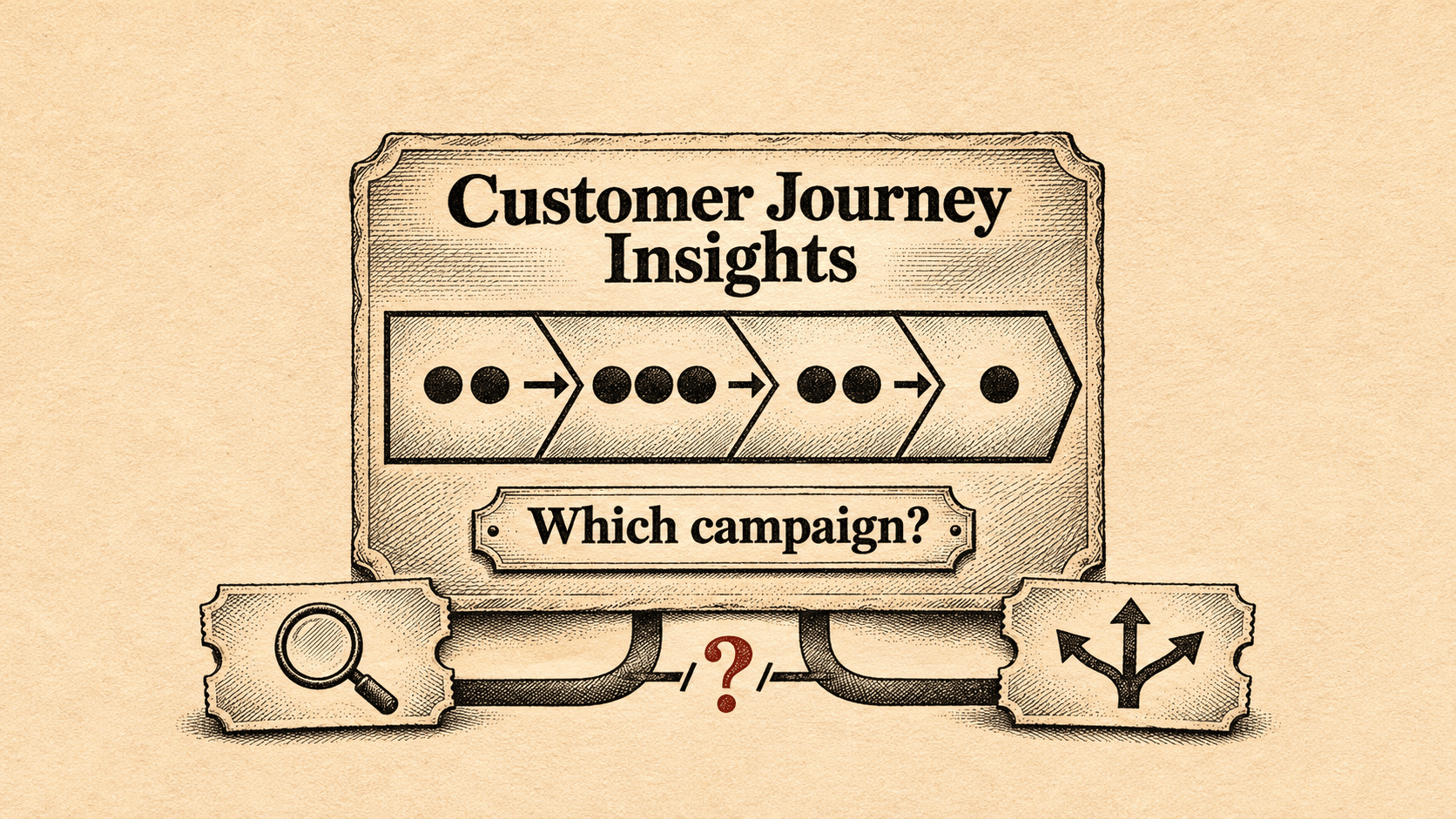
A reporting card that sorts users into Unaware, Aware, Consider and Act is being piloted on the Google Ads Overview page, and clients with eligible accounts may see it before you have explained it. Google's Help article on Customer Journey Insights describes a pilot for eligible advertisers running Performance Max, Search or Shopping. The page is undated, so it does not establish when the pilot began. It shows how users move between stages. It does not show which campaign moved them.
What changed
Status: pilot. The Help article opens with: "Customer Journey Insights is a new Google Ads Overview page reporting card pilot for eligible advertisers." If your account is eligible, the card shows by default on the Overview's Home page, and you can also add it to any Custom view. It is hidden if the selected campaign is ineligible or if data is unavailable. The article gives no wider rollout date.
What the card shows. It has two tabs:
- Customer journey: the number of unique users who interacted with your campaigns before and after your ad ran, across Unaware, Aware, Consider and Act.
- User actions: the total count of leading user actions, such as branded searches or adding to cart, within each journey stage.
Google says it analyses historical journey data to set the rules that place a user in a stage, based on how likely the same user is to complete a deep conversion after observed leading actions. The stage definitions use data from the past 30 days, and a user lands in a stage if any one of that stage's criteria is met. Unaware means no observed actions towards your business before the ad interactions in the last 30 days. Eligible ad interactions are currently physical clicks and engaged views across Search and YouTube. Google's own example: a user who views your YouTube ad or clicks your Search ad and then searches for your brand moves from Unaware to Consider.
Eligibility. Campaigns must use Performance Max, Search or Shopping. Ads must run on Search, Shopping, Discover Feed or YouTube (within Performance Max).
Limits Google lists.
- Reporting currently includes only data from signed-in users.
- There is an 8-day delay because of processing time for certain input data. If the selected date range has no fresh data, the card does not show.
- The card displays up to 180 days of backward-looking data and includes 60 days of historical backfill at launch.
- The backend uses Pacific Standard Time (PST) but displays in the account's local timezone.
- If a user interacts with several campaigns, the attribution system does not currently differentiate which campaign caused the reported stage movement, but the user is counted once across them.
Action required. None yet. In Google's words: "Currently, this card is purely for reporting and transparency."
One naming wrinkle: the page switches between Customer Journey Insights, Customer Journey Measurement and CJM. Its introduction lists the stages as "Aware, Consideration, Act", while the tabs and table use Unaware, Aware, Consider and Act. This article uses the four-stage naming.

What this means for specialists
Google's pitch is that current measurement "focuses heavily on final conversions" and misses earlier value. Among its listed benefits are surfacing long-term value and a point headed "Defend your marketing investments". Those are Google's claims for the card. The article offers no results to support them.
The signed-in restriction matters most for how you quote it. The counts describe the signed-in subset of the people your ads reached, so they may differ from totals in reports that include signed-out users, and a stage share is not a share of all your audience.
The missing campaign credit is the second limit. The article says the tabs help you analyse behaviour "at the campaign level" and cites budget allocation as a benefit, yet it also says the system does not say which campaign caused a stage move. A user touched by a Search campaign and a Performance Max campaign appears once. That makes the card a view of overall movement. It is a weak basis for moving budget between named campaigns.
It also sits beside existing Overview cards. The Overview page article already lists "Performance by stage" and "Cross-campaign impact", both marked new. Cross-campaign impact groups campaign types into journey stages by bidding strategy, not marketing objective. Customer Journey Insights assigns stages to users from observed actions. Clients may see both, with different logic behind similar stage names.
Branded searches count as a leading action in the User actions tab, so brand search activity will appear in the stage numbers. Read that tab with your brand campaigns in mind.
What to do this week
- Open the Overview Home page for each client account and note whether the card appears. If it does not, check whether the selected campaign is ineligible or the date range lacks fresh data.
- Check which campaigns are Performance Max, Search or Shopping, and whether their ads run on Search, Shopping, Discover Feed or YouTube (within Performance Max). That tells you where the card can appear.
- Open the Help article's stage table and compare the Google Ads conversion tracking events it lists for Consider and Act against the conversion actions set up in each account.
- Set the Overview date range with the 8-day delay in mind, and note which dates the card leaves out before comparing it with other reports.
- Open the Cross-campaign impact and Performance by stage cards, and write down how their stage grouping differs from this card.
- If a client reports from Custom views, decide whether to add the card, and label it as a pilot if you do.
- Draft a short client line covering three points: signed-in users only, a user across several campaigns counted once, and no campaign-level cause for stage moves.
What we do not know yet
- The Help page carries no date, so it does not establish when the pilot began.
- Google does not say what "eligible advertisers" means beyond campaign type and placement, how accounts are chosen for the pilot, or which markets are included.
- There is no timetable for wider availability or for ending the pilot.
- The article does not say how Performance Max activity outside Search, Shopping, Discover Feed and YouTube is treated.
- It does not say what share of users are signed in, so the coverage of the numbers is unknown.
- It gives no accuracy or validation detail for the stage rules beyond describing them as based on historical data.
- It does not say whether the delay or the signed-in restriction will change.
Sources & Further Reading
- support.google.com: About Customer Journey Insights - Google Ads Helphttps://support.google.com/google-ads/answer/18850198
- support.google.com: About Performance Max campaigns - Google Ads Helphttps://support.google.com/google-ads/answer/10724817
- support.google.com: About the Overview page - Google Ads Helphttps://support.google.com/google-ads/answer/7321090