Microsoft Advertising rebuilds its automated bidding models
Microsoft Advertising said on 18 November 2026 that it was rolling out rebuilt bidding models. Microsoft says Maximum CPC caps override CPA and ROAS targets.

Bidding behaviour in Microsoft Advertising accounts that use CPA or ROAS targets may start to shift, because Microsoft announced on 18 November 2026 that it is rolling out rebuilt bidding models. There is no opt-in described. The post also sets out advice on Maximum CPC caps and target changes.
In the post, Microsoft Advertising says it is "rolling out the biggest upgrade to bidding models in a decade". The performance figures below are all Microsoft's own.
What changed
Rolling out now (stage one). Microsoft describes this as "the first stage of our updates". It says it rebuilt the model that predicts whether a click will become a sale and how much that sale is worth, using "new user signals and a better way of valuing each conversion". It lists three improvements:
- More consistent performance: bids meet CPA and ROAS targets more consistently, without giving up conversion volume or value.
- Faster optimisation: bids adjust nearly twice as quickly when a CPA or ROAS target is updated.
- More predictable delivery: budgets pace more evenly through the day and campaigns ramp to full budget faster.
Microsoft's reported results. All three figures come from "Microsoft internal data", and the post gives only the market and period, not sample sizes or baselines:
- For advertisers using Maximize Conversion Value or Target ROAS, Microsoft says the improvements delivered on average 10% more conversion value per click at a similar ROAS. The footnote says Global, Search and Audience Network, August 2026.
- Advertisers who switch Search campaigns from Target CPA to Target ROAS see 8% greater conversion value on average at a similar return on ad spend, Microsoft says. The footnote says Global, August to September 2026. Microsoft adds that the greatest improvements come from optimising on actual transaction values, such as purchase revenue.
- Advertisers who switch from eCPC to Maximize Conversions with a CPA target see on average 18% more conversions at a similar cost per action, Microsoft says. The footnote says Global, June to July 2026.
The second and third figures describe a strategy switch, not the model upgrade itself.
Planned. Microsoft says "there's more to come in 2027" and that it will "continue to roll out improvements automatically to more accounts over time". No dates are given.
Microsoft's guidance. The post also sets out best practice:
- Conversion tracking is a prerequisite. Microsoft names Universal Event Tracking (UET), Conversions API and offline import, and recommends UET for its richer signals.
- For new campaigns, accounts with at least five conversions should start on a conversion-based strategy, not Enhanced CPC. New accounts with fewer than five conversions can start on Enhanced CPC first.
- Major changes drive volatility: a new campaign, a bid strategy switch, and adding or removing conversion goals.
- Large target CPA increases or ROAS decreases open up new inventory, so short-term volatility is expected. To limit it, Microsoft says to change in 15% increments and review after one conversion cycle.
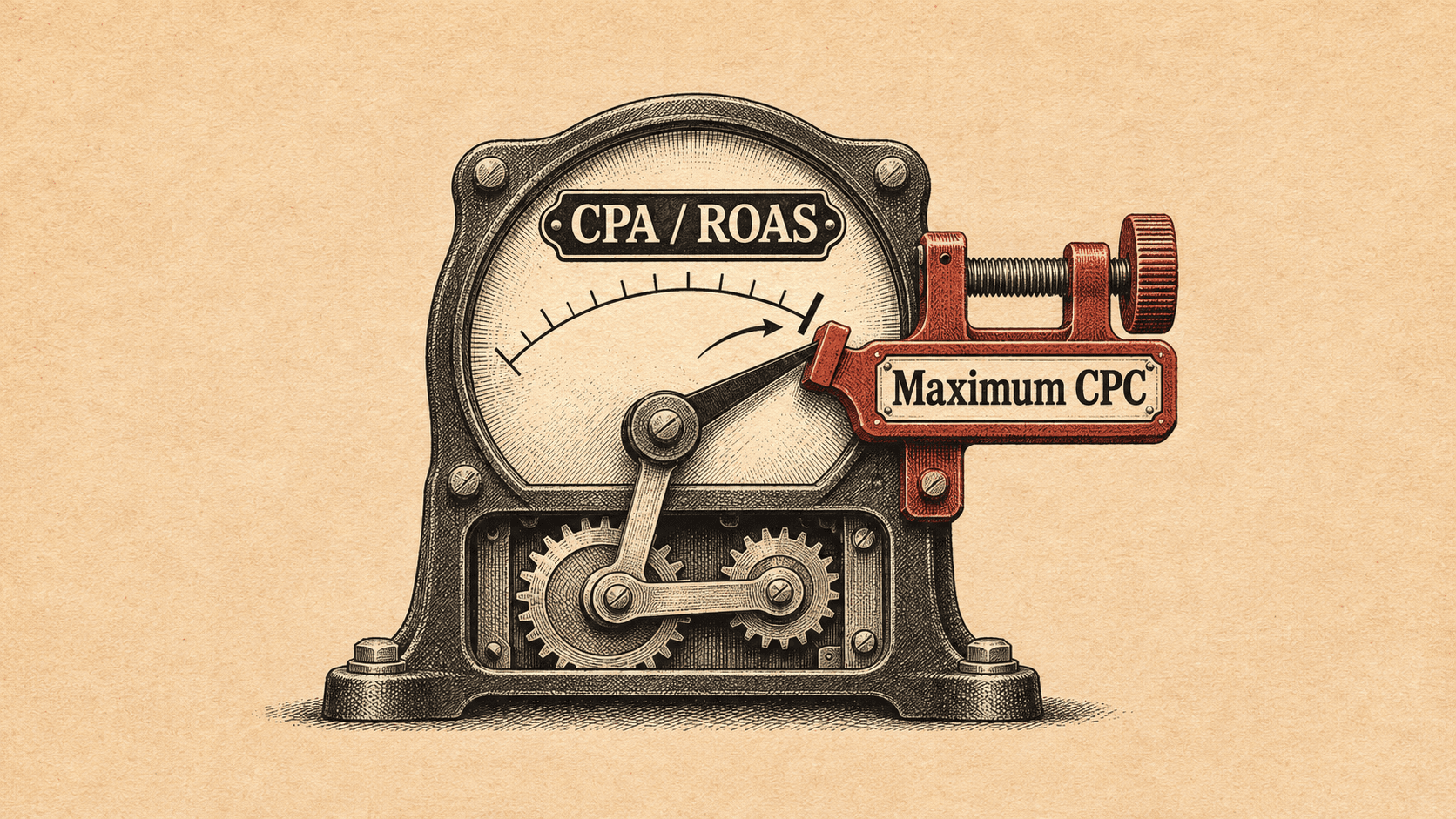
- Keeping a Maximum CPC is "not recommended". Microsoft says it overrides CPA and ROAS targets and gives the system conflicting instructions, even when the cap is above average CPC.
- Evaluate after enough data, ideally 30 conversions in 30 days, and 1 to 2 conversion cycles after major changes. Judge at campaign or portfolio level, not ad group or keyword level, and by conversions and CPA or ROAS, not keyword-level CPCs.

What this means for specialists
The practical issue is attribution of change. If the models are being applied to accounts over a period Microsoft has not specified, a shift in CPA, ROAS or pacing could come from the model, from a target edit or from the market. Without a dated record in the account history, the three are hard to separate afterwards.
The Max CPC advice is the most concrete instruction. Microsoft says a cap conflicts with a CPA or ROAS target. Any campaign that carries both is a candidate for review, and Microsoft identifies Maximum CPC caps as a source of conflicting instructions. Whether to remove a cap is a judgement for each account, but the vendor position is clear.
The volatility guidance bears on how targets get changed. Microsoft says targets are "directional levers" and that its bidding lets campaigns overachieve on target CPA or ROAS regardless of budget limited status, which it contrasts with other platforms. That is a vendor claim about its own system and about competitors. Read it as a reason to look at overdelivery against targets in your own data, not as a settled difference.
The 8% and 18% figures are about moving between strategies. Microsoft reports the greatest improvements when actual transaction values, such as purchase revenue, are used to optimise.
The evaluation guidance also tightens reporting habits. Microsoft wants judgement at campaign or portfolio level after roughly 30 conversions in 30 days, which rules out reading keyword-level CPCs as a verdict on the bidder. Low-volume accounts may not reach that threshold in a month.
What to do this week
- Record 18 November 2026 in whatever change log you keep for each Microsoft Advertising account, so later movements in CPA, ROAS and pacing can be set against the announcement.
- Open your campaigns and list every one with a Maximum CPC set alongside a CPA or ROAS target. Decide which caps to remove, given Microsoft's advice that they override the targets.
- Check which campaigns still use eCPC or Enhanced CPC, and whether each account has at least five conversions. Microsoft recommends a conversion-based strategy from the start for those that do.
- Check conversion tracking: confirm UET is firing, and whether Conversions API or offline import is in place. Check that Target ROAS campaigns receive actual transaction values.
- If you plan target changes, set them in 15% steps and put a review date one conversion cycle later. Avoid creating new campaigns, switching strategy or changing conversion goals in the same window.
- Set your reporting view for bid strategy reviews at campaign or portfolio level, and note which campaigns are short of 30 conversions in 30 days.
What we do not know yet
- Which accounts have the new models now. Microsoft says only that it is rolling out, and that later improvements will reach "more accounts over time".
- The timing of the stage-one rollout, and whether accounts will be notified inside the platform. The post gives neither.
- Whether the rollout is global. The reported figures are labelled Global, but the post does not say where the models are live.
- What the 2027 improvements are. The post gives only the year.
- The sample sizes, baselines and definitions behind the three averages, or how "nearly twice as quickly" was measured.
- How the 10% result for Maximize Conversion Value and Target ROAS was split between the model upgrade and other factors. The first figure covers Search and Audience Network together.
- Whether existing Maximum CPC caps will be changed in any way by the rollout. Microsoft only says they are not recommended.
Sources & Further Reading
- Microsoft Advertising: Building the next generation of automated bidding at Microsoft Advertisinghttps://about.ads.microsoft.com/en/blog/post/november-2026/building-the-next-generation-of-automated-bidding-at-microsoft-advertising