Google Demand Gen gets Seasonality Adjustments for Smart Bidding
Google's 18 November 2026 Demand Gen Drop adds Seasonality Adjustments to Target CPA and Target ROAS bidding, and points to checkout links and creator boosts ahead of peak trading.

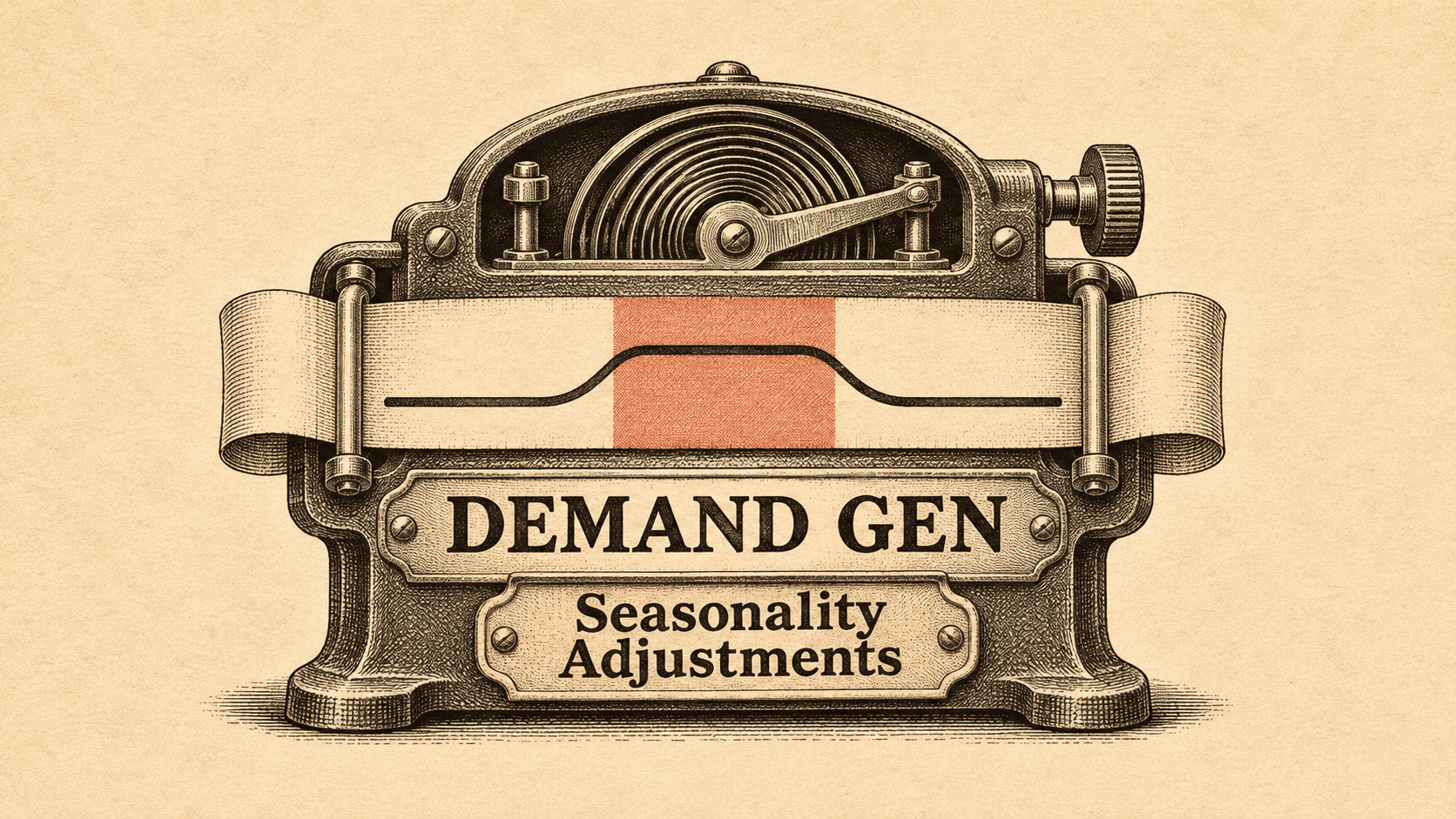
Demand Gen campaigns that use Target CPA or Target ROAS can now use Seasonality Adjustments for short promotions, Google said in its November Demand Gen Drop on 18 November 2026. The same post pushes product feeds, checkout links, Universal Commerce Protocol (UCP) checkout and Creator partnerships boost. Google's checkout help page covers products for sale in Great Britain, among other markets, but checkout on the named ads formats is US only.
What changed
Features highlighted in the Drop
- Seasonality Adjustments in Demand Gen. Google describes them as "newly available in Demand Gen campaigns", used with Smart Bidding (Target CPA or Target ROAS) "to factor in expected conversion rate increases during short promotions". Google says this lets campaigns "bid competitively from day one and smoothly return to baseline afterward". That is Google's claim, not a measured result.
- Product feeds. Google tells advertisers to activate product feeds to show catalogue items on YouTube. Google cites Petco: a 6% lift in purchase intent, a 71% surge in store visits and a 30% boost in overall Omni ROAS. The post gives no test design or comparison basis for those figures. The post does not say whether anything about product feeds is new.
- Creator partnerships boost. The post highlights it, and Google's help page says it can be used across all Google Ads campaigns, with some features limited by campaign type. Google quotes Javvy Coffee at 50% higher conversion rates, and Shopee at a 9x average ROI from affiliate partnerships boost. Again, no basis is given. The sources do not say what is new about the feature this month.
Available with conditions
- Checkout links. Google's Merchant Center Help page says the Checkout feature is available on some YouTube and Display ads formats "in the United States only". The same page lists Great Britain among the markets where the article applies to products for sale. Those two statements sit side by side: the help page covers products for sale in Great Britain, while checkout on the ads formats is US only. Checkout links are not supported on desktop, only mobile and tablet, and Google says its algorithms decide when the feature appears.
Early access
- UCP-enabled checkout. Google's UCP help page says the checkout feature is available for select merchants, for products with eligibility in the United States, Canada and Australia. Merchants register interest through a form, meet the requirements and complete a technical implementation. Only listings using the native_commerce(checkout_eligibility) product attribute show the "Buy" button. Google says the protocol "will be available in phases".
Where the sources differ
Google's blog post presents UCP-enabled checkout as a way to speed up the path to purchase on YouTube. The UCP help page names AI Mode in Google Search and Gemini as the surfaces, says merchants "may see this checkout experience soon", and does not mention YouTube. Treat the YouTube link as unconfirmed on the support side.

What this means for specialists
Seasonality Adjustments matter most if you run short sales on Demand Gen with Target CPA or Target ROAS. Google's stated purpose is to account for an expected rise in conversion rate, so the adjustment depends on you having a view of what the promotion will do. The sources do not say how the adjustment is entered or how long a promotion can be, so test it on one campaign before relying on it across an account.
The checkout material has a narrower audience than the headline suggests. Google's help page puts checkout on the named YouTube and Display ads formats in the United States only. If you sell into the US, the page sets out two opt-in routes, account level or product level, and allows only one of them. It says only admins can edit checkout settings. It also advises against tracking parameters in the URL template and asks you to set up conversion tracking for ads accounts.
Checkout changes the shopper's route. Google warns that shoppers may not see the product details page before buying, so product warnings and required disclosures belong on the checkout page too.
On creator content, Google's help page shows the co-branded partnership ad format supported in Demand Gen for In-Feed and Shorts, and not in Performance Max. Creator videos are accepted automatically once the creator initiates the link, and appear in the "Received" tab, not "Linked". Google puts rights on the advertiser: you must secure sufficient rights to use the video as an ad, which may need a separate agreement.
What to do this week
- Open your Demand Gen campaigns on Target CPA or Target ROAS and list which ones cover a short promotion, since those are the ones Seasonality Adjustments are described for.
- If you sell in the US, open Merchant Center, go to Settings, then Business info, and check the "Checkout" card. Confirm you use either an account-level URL or the checkout_link_template attribute, not both.
- For account-level URL templates, test the URL with TEST URL STRUCTURE. Check that it supports the HTTP GET method, does not need a sign-in, carries no tracking parameters, and that Google Storebot can access your site.
- Check that your checkout or cart page shows your brand, product details, price and any required product disclosures.
- Open the "Received" tab in Google Ads for creator videos linked to your account, and check you hold the rights to use each one as an ad.
- If you plan to use creator videos, set up the experiment Google describes: a control campaign with a regular video creative against a test campaign with a regular creative plus a creator video, keeping budgets and targeting consistent.
- For products with eligibility in the US, Canada or Australia, read the UCP requirements and decide whether to submit the interest form.
What we do not know yet
- Where Seasonality Adjustments sit in Demand Gen, how they are configured, how long a promotion can be, and whether the rollout covers every account and market. Google's post says only that they are "newly available".
- Whether checkout on YouTube ads will extend beyond the United States, and when.
- Whether UCP-enabled checkout will appear on YouTube, as the blog implies, or only on AI Mode and Gemini, as the help page names. Google gives no date beyond "soon" and "in phases".
- The criteria for UCP access beyond the stated requirements and interest form.
- The method behind the Petco, Javvy Coffee and Shopee figures, and whether the product feeds or Creator partnerships boost changes are new this month.
Sources & Further Reading
- blog.google: Win holiday revenue with November’s Demand Gen Drophttps://blog.google/products/ads-commerce/demand-gen-drop-november-2026/
- support.google.com: Add a checkout link for your products - Google Merchant Center Helphttps://support.google.com/merchants/answer/13945960
- support.google.com: About the Universal Commerce Protocol (UCP) and UCP-powered checkout feature on Google...https://support.google.com/merchants/answer/16837055
- support.google.com: Creator partnerships boost - Google Ads Helphttps://support.google.com/google-ads/answer/15223349