Data Manager API adds Google Ads call conversions
Google's Data Manager API can now send call conversions to Google Ads and report which rows failed, so lead-gen accounts can audit uploads record by record.


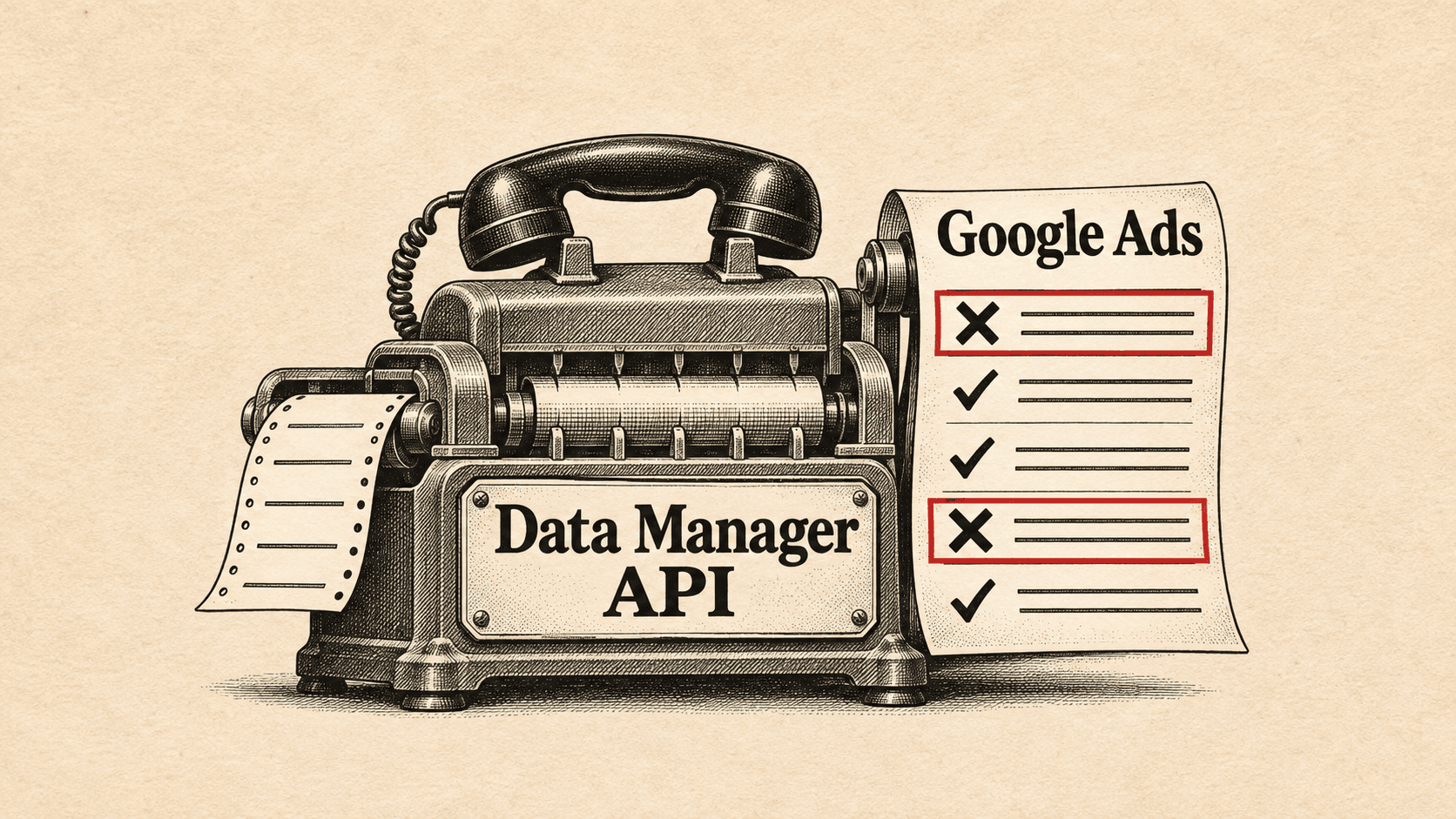
Accounts that report phone calls as conversions can now send them to Google Ads through the Data Manager API, and see which individual records failed when an upload goes wrong. Google announced both changes on 4 November 2026 in a post on the Google Ads Developer Blog. It matters most to lead-gen advertisers and the developers or call-tracking vendors who maintain their offline uploads.
What changed
The post describes these as part of the latest release of the Data Manager API. It does not label any of the three changes as a pilot or give a staged rollout, and it gives no future dates for them. The one exception is a limit on attribution, covered below.
Call conversions. Google says you can now use the Data Manager API to send call conversions to Google Ads. In its words, call conversions track "when your ads lead to phone calls and when those calls lead to valuable customer actions." To send one, you set the new call_info field on the event. Its start_timestamp holds the time the phone call started, and the caller is identified with a hashed phone number in user_data. The post links to a guide titled "Upgrade call conversions from the Google Ads API", which suggests existing uploads are expected to move across, though the post does not say the older route is being retired.
Row-level diagnostics. The post says a successful ingestion request does not guarantee every record was processed. When you check request status and diagnostics, each ErrorCount and WarningCount now includes a record_indices field. It lists the 0-based positions of the affected records in your original request. Google's example: a record_indices value of [0, 3] on an ErrorCount with reason PROCESSING_ERROR_REASON_CLICK_NOT_FOUND means the first and fourth events in the request failed for that reason.
Google says to use the indexes with the error reason to correct the failed records and resend them. Records with warnings were not rejected, but some of their data was ignored, so the cause should be fixed in future requests.
Lead IDs. A new lead_id field in ad_identifiers carries the Google-generated ID issued when a user submits a lead form. You can include lead_id and the existing match_id field as event identifiers for offline and multi-source events sent to Google Ads, Floodlight and Google Analytics destinations.
This is the part that is not finished. Google states that attribution using lead_id and match_id is not available yet, and that until it is, you should include other identifiers to ensure events are attributed.

What this means for specialists
Call conversions can now be sent to Google Ads through the Data Manager API. For accounts that already use this API for other supported events, it may be worth considering whether call conversions belong in the same upload. Whether that is worth doing depends on how your calls reach Google today. If a call-tracking vendor handles the upload, the question is for them: whether they plan to use the Data Manager API, and on what timing. The post does not say anything about vendors.
The diagnostics change is the more immediately useful one. A successful ingestion request does not guarantee every record was processed; record_indices now identifies the affected records. With record_indices, an error count can be tied back to specific positions in the file or payload you sent. That makes it possible to separate a systematic problem, such as the same reason across many rows, from a handful of bad records. It also gives you something concrete to show a client when reported call volume in the platform is lower than the call volume in the tracking system.
The warning behaviour deserves attention. Google says warned records were not rejected but some of their data was ignored. Warnings still need investigation because some of the record's data was ignored. Treat warnings as a data quality list, not as noise.
The lead_id caveat is a reason not to rebuild around it yet. Google says attribution using lead_id and match_id is not available, so any workflow that depends on them alone would leave events unattributed. Sending them alongside other identifiers is the route the post describes.
What to do this week
- Find out how each lead-gen account's call conversions reach Google Ads today, and who owns that upload (you, a developer or a call-tracking vendor).
- Open the "Upgrade call conversions from the Google Ads API" guide and compare its steps with your current setup before deciding whether to move.
- Check that the call data you hold includes the time each call started, since
call_infousesstart_timestamp, and a phone number you can send hashed inuser_data. - Open the "Check affected records" section of the diagnostics guide and read how
record_indicesis returned for a request. - For a recent upload, check request status and diagnostics and list every
ErrorCountandWarningCount, with its reason and the affected positions in the original request. - Where records failed with
PROCESSING_ERROR_REASON_CLICK_NOT_FOUNDor any other reason, correct them and resend, then note what caused each group of failures. - If you plan to send
lead_idormatch_id, keep sending your other identifiers too, as Google instructs, and read the release notes for the full list of changes.
What we do not know yet
The post gives no date for attribution using lead_id and match_id, only that it is not available yet. It does not say which other identifiers will attribute events in the meantime beyond "other identifiers", so check the documentation for your destination.
It also does not say whether the Google Ads API route for call conversions will be retired, whether any accounts or markets are excluded from the new support, or whether call-tracking vendors have been told. It does not say how long diagnostics are kept after a request, or whether record_indices is limited to particular destinations. Google says nothing about what difference moving to the Data Manager API makes to reported conversions, and no result should be assumed.
Sources & Further Reading
- ads-developers.googleblog.com: Google Ads Developer Blog: Data Manager API now supports Google Ads call conversions an...http://ads-developers.googleblog.com/2026/11/data-manager-api-now-supports-google.html