Amazon Ads: FTC unredacts claims of secret auction surcharges
The FTC and 22 states have published the redacted detail of their Amazon Ads complaint, alleging hidden surcharges of up to 250% on peak days. These are allegations, not findings.


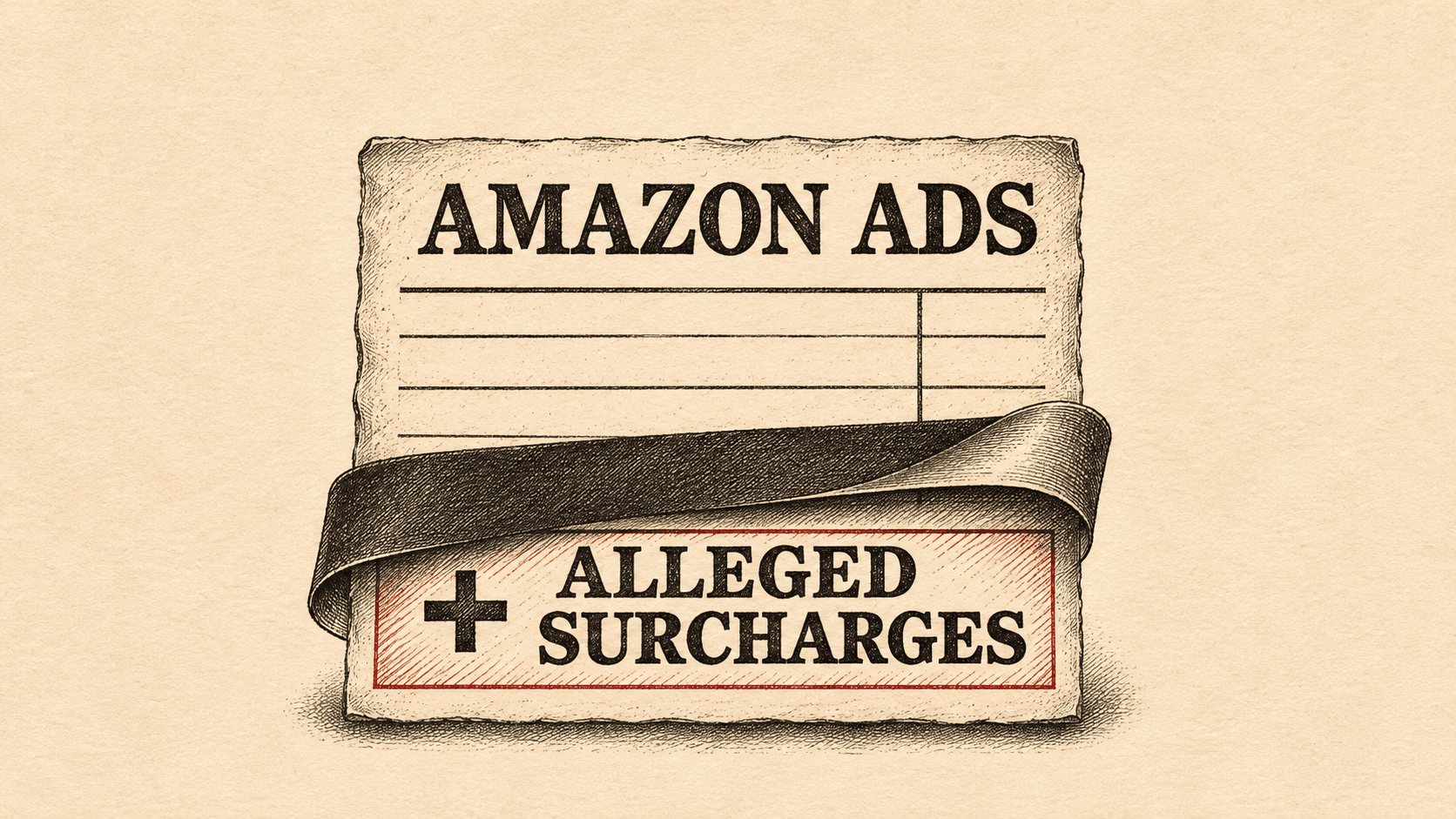
If you buy search advertising on Amazon, the way you explained peak-day cost-per-click rises to clients is now in question. The Federal Trade Commission and 22 states recently filed an updated complaint that makes previously redacted details public. It alleges Amazon secretly added surcharges to its ad prices. Everything below is an allegation made in a complaint. None of it is a finding.
What changed
Status of the case. In August, the FTC and its state partners sued Amazon in the Western District of Washington. The FTC says the updated filing "makes public factual details that had previously been redacted". The FTC describes the complaint as alleging "deceptive and unfair practices to secretly inflate prices in its online search advertising auction". Attorneys general from Alaska, Arizona, California, Colorado, Florida, Idaho, Illinois, Indiana, Iowa, Kentucky, Louisiana, Maryland, Nebraska, New Jersey, New York, North Carolina, Oklahoma, Pennsylvania, Rhode Island, South Carolina, Vermont and Washington joined the filing.
The size of the alleged markup. The unredacted portions allege Amazon raises advertising prices by as much as 50% above auction results on ordinary days, and by as much as 250% on major shopping days like Prime Day or Black Friday.
Holiday figures. The complaint alleges that during the 2021 holiday season Amazon increased advertisers' average cost-per-click by 20%, with some advertisers seeing increases of over 200%. For the 2022 holiday shopping season it alleges Amazon raised its surcharges to increase its revenue by $87 million worldwide.
An individual advertiser. One large food and beverage advertiser was allegedly subjected to price increases of more than 100% during Prime Day in 2023. The FTC says Amazon internally acknowledged that the increases cut the advertiser's return on ad spend in ways that were "destroying campaign performance".
Revenue targets. In 2023, according to the complaint, Amazon executives discussed finding an additional $40 million in revenue to meet corporate financial targets. The complaint quotes an email from the head of Amazon Ads to the senior vice president of ad products and technology: "ideally at least $40MM would be helpful", to be found through reserves.
What advertisers were told. The complaint alleges that when advertisers asked whether "something has changed with respect to the second price auction process", Amazon falsely said the increases came from more competition. In one instance an account manager is quoted as saying there was "not a bug, or a change in auction style" and that the rise in cost-per-click was "a direct reflection" of a more crowded marketplace.
The FTC release does not report any ruling, any response from Amazon or any remedy.

What this means for specialists
The practical issue is attribution of cost. If you have attributed Prime Day or Black Friday cost-per-click spikes to competition, review whether your records support that explanation. The complaint alleges that some of those increases came from surcharges applied on top of auction results, and that Amazon gave advertisers the competition explanation when they asked. If the allegations were upheld, a peak-season rise in cost-per-click would not be explained by competitive demand alone. That is an implication: no ruling has been reported.
The complaint also bears on how return on ad spend is read after peak events. The food and beverage example ties a price increase of more than 100% to a drop in return on ad spend. A weak Prime Day result might therefore have a cause that sits outside campaign set-up, though nothing in the release lets you prove that for any single account.
Until a court rules, the cautious position is to describe peak cost rises to clients as observed, not as proven to be competitive. Records of what you saw and what Amazon told you are the useful asset.
What to do this week
- Pull cost-per-click and return on ad spend for Prime Day and Black Friday, for whichever of the 2021, 2022 and 2023 periods you have data, and set them beside ordinary-day figures for the same accounts.
- Check whether any account saw a cost-per-click rise of more than 100% on Prime Day 2023, the scale the complaint cites for one advertiser.
- Search your email and ticket history for any explanation an Amazon account manager gave for cost-per-click increases. File those with dates.
- Check whether anyone at your agency or client ever asked Amazon whether "something has changed" in the auction, and what the written answer was.
- Review recent client reports and decks for wording that states competition as the established cause of peak-day cost rises, and reword where you cannot support it.
- Read the FTC release in full, so that what you tell clients separates the complaint's allegations from anything decided.
What we do not know yet
The FTC release gives no date for the updated filing beyond saying it was filed "recently", and it says the original suit was filed in August without a year. It carries no response from Amazon, no court schedule and no information on possible remedies, refunds or penalties.
The release does not say which Amazon ad products or formats the alleged surcharges applied to, beyond "online search advertising" and "Amazon's platforms". It does not say whether surcharges applied outside the US, though it gives the 2022 revenue figure as worldwide. UK-based advertisers cannot tell from the release whether their own accounts are in scope.
It also does not say how an advertiser could see the gap between auction results and the prices charged. Without that, an account's own figures can show a pattern but not demonstrate a cause. Finally, the release does not give figures for years after 2023 beyond the Prime Day example, so the picture for 2024 and 2025 is not covered.
Sources & Further Reading
- Federal Trade Commission: New Details Emerge in Amazon Ads Auction-Rigging Casehttps://www.ftc.gov/news-events/news/press-releases/2026/11/new-details-emerge-amazon-ads-auction-rigging-case